Wednesday, June 16, 2021

The Least We Can Do

My An Arkie's Faith column from the June 16, 2021, issue of The Polk County Pulse.

The sun was beginning to come up as I drove into Little Rock. A faint yellow-orange glow forced its way through the overcast sky. For the past two months, I have been going to Little Rock very early in the morning to pick up the auto glass that I need for my business. My supplier no longer delivers to Polk County, so I have to make two trips a week to Little Rock to pick up my glass. I had a large order that would more than fill my truck and a busy day scheduled when I made it back to my shop.

As we started to load the truck, my supplier’s software system was slow. The warehouse employee enters each piece of glass into the software to bill me and take the glass out of inventory. What should have taken just a few minutes dragged on for half an hour. I was getting restless thinking about the long drive home and the customers who would be waiting for me. Finally, with every slot in my rack filled and with four side glasses and five cases of urethane crammed in the cab of my little truck, I was on my way home. There was barely enough room for me in the S-10, and it wasn’t easy to shift gears. 

After driving for an hour, I needed to get out and stretch my legs and use the bathroom. I pulled off the road into a busy gas station, parking in the only space available. As I got out, I noticed the sign on the door of the vehicle next to me. It said, “Elmer Beard, Poet.” A spry, older gentleman was walking towards the car. “Are you the poet,” I asked? “Yes, I am.” We exchanged pleasantries and talked about the weather. “Let me give you a copy of my book of poetry,” my new acquaintance said. “I would like that,” I answered. “I am a writer and have a copy of my latest book in my truck. Would you like to trade?” Both of us had to move things around in our vehicles to get to our book. We each signed our books to each other, and after exchanging phone numbers, we went on our way. As he was leaving, Elmer’s final words to me were, “If I come to Mena, I will give you a call.”

As I was driving home, I thought about my interesting encounter with Elmer. He had been so polite and upbeat. He seemed like a man who enjoyed life and lived it to the fullest. It was such a chance meeting at a random gas station beside the road. But Elmer had made a deep impression on me, and I couldn’t get him out of my mind. If I had been able to load my truck without the software issues, I would not have been in the right place at the right time to meet Elmer. But I was thankful that I had. I couldn’t wait until I had time to sit down and read his book. 

That evening, I sat in my favorite turquoise Adirondack chair on my deck and started to read Elmer’s book of poetry. The cover has a photo of Elmer in an old Ford pickup from the early sixties. The title is “Let Reason Roll: Race, Religion & Reflections. I was intrigued by the author title at the bottom of the book; Poetry by Elmer Beard The Octo Griot. From the book, I learned that Elmer is in his eighties. Octo is the Latin prefix for the number eight, so that part made sense, but what about the griot. A quick internet search led me to the answer. The Oxford Dictionary lists the definition of griot as “a member of a class of traveling poets, musicians, and storytellers who maintain a tradition of oral history in parts of West Africa.”

As I read his poetry, It seemed like I began to know him as a man. Elmer has a way of exposing his inner self through simple words. He tackles tough topics with gentleness and the insight of someone who has gained wisdom from his life experience. The friendly, unassuming black octogenarian grew up in the small southern town of Chidester, Arkansas. He earned degrees from Arkansas Baptist College and Henderson State University and spent many years as a teacher. He ended his teaching career as an adjunct English professor at Arkansas Baptist College and National Park College in Hot Springs. In addition, Elmer made a difference in his community by serving for sixteen years on the Hot Springs City Council.  

As I finished the book, I kept going back and rereading one short, simple poem titled “The Least We Can Do.” Elmer’s words kept going through my mind as I longed for a world that followed the simple concept of the poem. “I am who I am. And so are you. Courtesy is costless. The opposite is expensive. Respect is deserved. The least we can do. Is be kind and gentle. Regardless of values. Or our experiences. That’s the least. We can do.”

People who are kind and gentle have the potential to be rude or proud, but they have deliberately decided not to behave that way. They have intentionally chosen gentleness. That takes more strength than it does to treat others harshly. In his book Grace for the Moment, Max Lucado offers a pledge that we could all make our own: “Nothing is won by force. I choose to be gentle. If I raise my voice, may it be only in praise. If I clench my fist, may it be only in prayer. If I make a demand, may it be only of myself.”

For us as Christians, it is the least we can do. Galatians 5:22,23 (KJV) says, “the fruit of the Spirit is love, joy, peace, longsuffering, gentleness, goodness, faith, meekness, temperance: against such there is no law.” Gentleness is a fruit of the Spirit. When we see harshness and hate for others among Christians, we can see that they are not living in the Spirit. “Just as you can identify a tree by its fruit, so you can identify people by their actions.” Matthew 7:20 (NLT)

Gentle Reader, gentleness is a strong hand with a soft touch. It is a tender, compassionate approach to others, even those who are different from us. “Kindness, peace, love—may they never stop blooming in you and from you.” Jude 1:2 (VOICE) I leave you with the words of the Octo Griot, “I am who I am. And so are you. Courtesy is costless. The opposite is expensive. Respect is deserved. The least we can do. Is be kind and gentle. Regardless of values. Or our experiences. That’s the least. We can do.”

Tuesday, June 15, 2021

16,790 Days

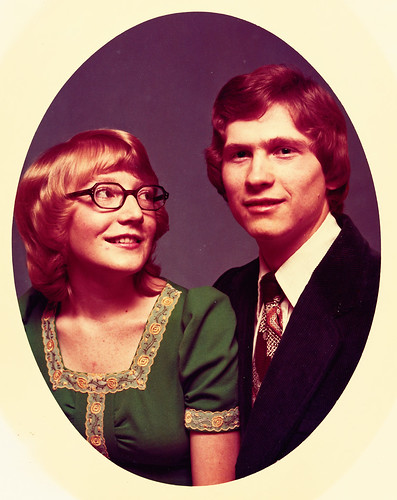
1975

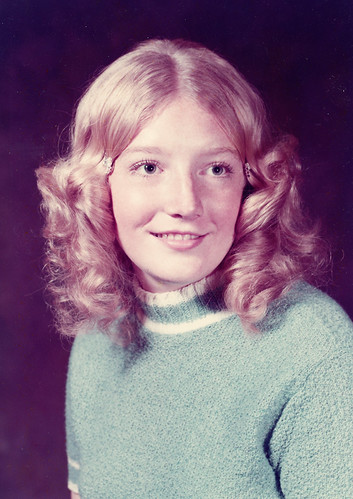
Today is a special day. Forty-six years ago on June 15, I said "I Do" to my very best friend. The best decision I ever made was to marry the girl who stole my heart when she walked into Mr. Brost's History class at the beginning of my senior year of high school. I know that high school romances are not supposed to be forever and that when kids get married when they are in their teens the marriages aren't supposed to last, but we have proven those things wrong. It is still awesome to go through each day with my best friend.

A Senior in High School

This is the girl that took my breath away when she walked into class that morning. I was too shy to talk to girls, so it was almost a year before she had any idea that I was interested in her. I think that the good Lord knew that I needed all of the help I could get so he made it so that our paths crossed in a number of ways that year. Mr. Brost selected five students to work together each week producing learning packets for History class. Gina and I were both in the group. We both worked at the Harris Pine furniture factory. I worked on the dresser jig, and she made drawers. I would spend my breaks back with the drawer makers, but she still didn't catch on.

It came time for our High School graduation and I still had never gotten up the nerve to ask her out. Finally, I mustered up every ounce of courage I could find and asked her if she would march with me when we graduated. She told me that she would like to but she had already told Russell she would march with him. If I would talk to Russell she would march with me. Once again summoning up every bit of courage I had I talked to Russell. He was very gracious and bowed out. I was on cloud nine.

The rest is history. After a year of a long-distance relationship, five hundred miles, we were finally in the same place at the same time. I knew that I wanted to spend the rest of my life with this girl. On June 15, 1975, we were married in the Denver First Seventh-day Adventist Church.


In 2019, on our anniversary,  we attended the National Park Radio concert at Steel Creek near Ponca, Arkansas. We arrived at the campground early in the afternoon. So early, that we were the first to set out our chairs in front of the stage. We spent the afternoon swimming in the Buffalo River and picnicking while taking in the incredible scenic beauty of the area.

All afternoon people streamed into the concert area, and by the time the show began, the field was a teeming mass of people. When the first strains of music filled the air, everyone in the audience cheered as they settled down to watch the band play with the beautiful bluffs above the Buffalo River in the background. During the intermission, I was able to talk with the leader of the band, singer/songwriter Stefan Szabo, and asked him if he could acknowledge our anniversary and told him that we considered, “If the Rain is Fallin” our song. The song begins, “If the rain is fallin', it makes me think of you. And when the birds are callin', it reminds me too.”

Before the band played “If the Rain is Fallin',” Stefan let everyone in the crowd know that it was our anniversary and that we had chosen to spend our special day at the concert. He then dedicated the song to us. It was a special moment and came as a big surprise to my wife.


If the rain is fallin'
It makes me think of you
And when the birds are callin'
It reminds me too
But any moment now
Lord knows I'll be gone away
Oh please remember how
Our hearts still beat the same

And I was young when I first saw you
We held hands and I was scared
But now the only fear I go through
Is living life without you there

Happy Anniversary, Sweetheart!

Wednesday, June 9, 2021

Physical Therapy

My An Arkie's Faith column from the June 9, 2021, issue of The Polk County Pulse.

“Ouch,” I exclaimed as I struggled to get out of my chair. The pain in my left leg was excruciating. After standing, I had to wait a few moments for my leg to be strong enough to hold me up. This difficulty in getting out of a chair had become my new routine, and I was tired of it. I had suffered from arthritis pain in my knees for several years, but this was so much more. For a month or so, the outside of my left leg had been numb below the knee. If I knelt or something touched the numb area, sharp pain would shoot through my leg. I needed to find out what was happening and get some relief, so I called my doctor and made an appointment.

When I explained my symptoms to the doctor, he told me that he thought that inflammation of nerves in my back was the source of my pain. After taking x-rays, he wanted more information to make the diagnosis, so he scheduled an MRI. When the MRI results came back, he decided that the first course of treatment should be physical therapy. I looked forward to something that would lessen the pain. But it was several weeks before there was an opening for physical therapy. By the time that I was able to get a therapy appointment, the pain had intensified. 

When the day came for my first appointment, I was a bit nervous. Medical procedures and not knowing what to expect are way outside of my comfort zone. But Adam, my therapist, put me at ease. He was very thorough in his examination and carefully explained everything that he was doing. He showed me some simple exercises with unusual names like “wig wags” and “side-lying open book” and sent me home with instructions on performing five simple exercises that I was to do every day.

My attitude had improved when I came in for my second therapy session. Although I still had pain, I could already see improvement. I felt confident that things were going to get better with physical therapy. Once again, Adam made me feel optimistic as he explained that he thought nerve pain was the cause of my condition. He went into detail about the nerves and what we could do to make my situation better. 

One of the techniques he used was dry needling. It is a treatment in which sterile needles with no liquid inside, that is why it is called “dry” needling, are applied to trigger points in the muscle. Preliminary research shows that dry needling improves pain control, reduces muscle tension, and normalizes dysfunctions of the motor end plates, the sites that transmit nerve impulses to muscles. While Adam applied the needles to the affected area of my left leg, I could feel an electrical stimulation in my left big toe. He told me that it meant he was working on the proper nerve. 

One thing that became evident as Adam worked with me in therapy was how stiff and inflexible I am. I have a poor range of motion in my legs and am not able to bend easily. Flexibility is essential to maintain a healthy lifestyle. If your joints and muscles become stiff from either not being used or wear and tear, everyday activities are more challenging. Stretching and strengthening exercises increase your ability to move comfortably. 

The stretching exercises that I do daily should help me become more flexible. While doing the stretches, I realized that while my legs are not very flexible, I have other issues with flexibility. My body may not be very flexible, but neither is my mind. We often refer to someone as stubborn or headstrong. In a more flattering way, we may refer to them as uncompromising, determined, or persistent. We, as Christians, often look at these traits as positive and they can be. In 1 Corinthians 15:58 (ISV), Paul wrote, “Therefore, my dear brothers, be steadfast, unmovable, always excelling in the work of the Lord.” I believe that the Bible is firm and unchangeable. It contains God’s truth and His principles. But sometimes, that belief can make me very inflexible. 

We may think that we must remain faithful to principles and convictions, regardless of the opinion of others. But many Christians with this mindset bully others or are perpetually angry because they do not like what is going on. I recently heard an acronym that I want to adapt and use here; my apologies, Jeri. These people are cave people, that is, Christians Against Virtually Everything. There is a time to take a moral stand, but we should still be salt and light, and the only way to do that is to be flexible in the way we see things.

Flexibility, the ability to change directions quickly and compromise when appropriate, is an admirable quality. Think what would happen if an airplane pilot refused to be flexible and change altitude or direction when advised of a dangerous weather system. Or think about what could happen if car drivers refused to let other people merge into their lanes. Flexibility is necessary, but how should you decide when to be flexible and when to resist change? 

Maybe like me, many of you suffer from inflexibility. We have figured out how to live our lives and feel that to be victorious Christians we must be determined and uncompromising. The backbone of our beliefs becomes rigid rules and regulations. We are stubborn in our determination to control life’s course and outcome.

Often I have tried to maintain control over my life instead of letting God be in control. I thought I had life all figured out and was sure how God needed to answer my prayers. Yet rarely does life work the way I want it to or think it should. I am too inflexible. I like the answer to inflexibility given by the Christian author, Susan Lenzkes. She says, “there is a cure. Each time life throws us a punch, we can do a deep-knee bend, forcing our muscles of faith, hope and understanding to stretch.” She goes on to say, “Blessed are the flexible, for they shall not be broken. No, that’s not one of Jesus’ Beatitudes, but it is an attitude that makes all the difference in your emotional and spiritual health.”

Gentle Reader, are you a flexible person? Spiritual flexibility comes from exercising our faith and trust in God, not from an unyielding belief. We have to be accommodating and eliminate pride in our rigid rules and regulations. Inflexible Christians are not good witnesses to the world. Trillia Newbell says it this way; “What is so strange to me is people believe that by fighting, they are being faithful. It’s hard to convince someone that they may need to be slow to speak and to tame their tongue if they think they’re right. And if they think they’re fighting for Jesus.” Don’t be a cave person. Make it your goal to be flexible. 


Wednesday, June 2, 2021

Quiet Reflection

My An Arkie's Faith column from the June 2, 2021, issue of The Polk County Pulse.

Silence has spread through the house. The quiet is deafening as I sit typing. Both of my dogs are sleeping, and my wife is quietly working on her iPad. The street in front of my house is empty. There are no cars driving past or neighbor kids playing. Even the birds that were singing with boisterous voices earlier in the day are now silent. 

Just a few hours ago, the happy sounds of children filled the house while the adults talked, relishing our time together. Happy memories lit up the room as we swapped stories, and even as we recalled bittersweet anecdotes, it did not dampen the joyous mood. Memorial Day weekend has been extra special because we have family visiting. It has been a time to get reacquainted with a cousin that I haven’t seen for many years and meet her three children for the first time.

The kids had a great time meeting family they had never seen before. They loved playing on our deck, swinging on the porch swing, riding the joggling board, and especially playing with our dogs. I took them for a ride in the Model A, and they loved riding in the rumble seat. Their favorite activity of the weekend was visiting my cousins’ house and swimming in their pool. The water was cool, but they didn’t mind.

When it came time for them to leave, the kids didn’t want to go. We promised that we would come to see them when we could. They wanted to know if we would bring our dogs, but we told them that our dogs got carsick and didn’t travel well. Now that they are on the road back home and the house is quiet, I’m looking forward to the time I will be able to see them again.

As I reflect on the lovely weekend with family and recall the many stories and memories that we shared, I think about how fitting it was to have those conversations on Memorial Day weekend. Memorial Day is a day for remembering the men and women who died while serving in the United States Armed Forces. We spent a lot of our time remembering family members who are no longer with us. Remembering is what keeps loved ones with us after they are gone. 

A local hero that we remember on Memorial Day is Herbert Littleton. He was a United States Marine who posthumously received the Medal of Honor for saving his fellow soldiers by falling on a grenade during the Korean War.

Herbert Littleton was born on July 1, 1930, in Mena, Arkansas. He enlisted in the Marine Corps Reserve on July 29, 1948, for a one-year term. After the outbreak of the Korean War, Littleton reenlisted. He fought in South and Central Korea from December 17, 1950, until his death.

Littleton earned the nation’s highest award for valor on April 22, 1951, at Chungehon, Korea. He was serving as a Radio Operator with the First Marine Division. PFC Littleton was standing watch when a sizeable well-concealed enemy force launched a night attack against his company. Littleton quickly alerted the forward observation team and immediately moved into position to call down artillery fire on the enemy force. When the enemy threw a hand grenade into his area, he threw himself on the grenade, absorbing its full impact with his own body. He saved the other team members from severe injury or death by his prompt action and enabled them to repulse the enemy attack. Herbert Littleton was awarded the Medal of Honor for his bravery in the face of certain death.

Oliver Wendell Holmes Jr. gave a speech on Memorial Day in 1884. He ended his address with the words, “Our dead brothers still live for us, and bid us think of life, not death.” I believe that Holmes’ proposition to “think of life, not death” honors the fallen soldiers such as Herbert Littleton. Their sacrifice follows the example of Jesus, who gave His life for our freedom. The sacrifice that Littleton made for his comrades in arms and the sacrifice that Jesus made for you and me both show a selfless love for others.

The Bible describes this type of real love in John 15: 13 (NKJV) “Greater love has no one than this, than to lay down one’s life for his friends.” And also, in 1 John 3:16 (NLT), “We know what real love is because Jesus gave up his life for us. So we also ought to give up our lives for our brothers and sisters.” Herbert Littleton demonstrated this kind of love.

Many people sacrificed their lives for my freedom. But how often do I think about what they have done for me? I might think about them for a few minutes on Memorial Day, but they are not in my thoughts on most days. How often do I reflect on the sacrifice that Jesus made for me? Many Christians only think about what Jesus has done for them at times like Easter and Christmas.

In Luke 9:23 (NKJV), Jesus says, “If anyone desires to come after Me, let him deny himself, and take up his cross daily, and follow Me.” We need to thank God for the sacrifice of Jesus every day, not just once or twice a year or even once a week. “Through Him, therefore, let us constantly and at all times offer up to God a sacrifice of praise, which is the fruit of lips that thankfully acknowledge and confess and glorify His name.” Hebrews 13:15 (AMPC)

Gentle Reader, we are blessed to be living in a free country. We should honor the soldiers who have sacrificed their lives for the liberty we have. We should also thank God for the freedom he has given us. In Romans 6:22,23 (TPT), Paul wrote, “now, as God’s loving servants, you live in joyous freedom from the power of sin. So consider the benefits you now enjoy—you are brought deeper into the experience of true holiness that ends with eternal life! For sin’s meager wages is death, but God’s lavish gift is life eternal, found in your union with our Lord Jesus, the Anointed One.” I hope that you spent at least a few moments on Memorial Day in quiet reflection, remembering those who sacrificed their lives for your freedom. And every day, it is essential to remember the sacrifice that Jesus made for you. During times when your mind feels cluttered and overwhelmed, be quiet and reflect on Jesus. Quiet reflections can soothe your soul.


Wednesday, May 26, 2021

Scam Alert

My An Arkie's Faith column from the May 26, 2021, issue of The Polk County Pulse.

Ring, ring, ring. I crawled out of the vehicle I was working on and headed for the phone. “Richie’s,” I said, answering the phone. The voice on the other end of the line was furious. “I want you to stop calling me,” she shouted. I assured her that I had not called her. “Well, someone there is calling me,” she retorted. “I work alone, so I can assure you that no one called you from here,” I replied, adding, “my company never makes unsolicited phone calls.” “I know that the calls have been coming from you because your number is on my Caller ID,” she shrieked. 

I tried to calm her down by telling her, “I think that I know what is going on.” I explained that I had received telemarketer calls that showed on my caller ID as local phone numbers. A telemarketer knows that you are more likely to answer the phone if you think the call is from a local number. I’m not sure that she believed me, but at least she wasn’t yelling by the time our conversation ended. She and I had both been the victims of spoofing, and you probably have been too.

Spoofing is when a caller deliberately falsifies the information transmitted to your caller ID display to disguise their identity. Scammers often use neighbor spoofing, so it appears that an incoming call is coming from a local number or from a company that you may already know and trust. It seems that almost daily, I get robocalls that seem to come from local numbers.

The most common robocalls that I receive go something like this. “Hi, this is Susie calling with the vehicle service department. I see here that the warranty on your car is about to expire, and I was calling to see if you would like to extend this warranty to keep your car protected.” The Federal Communications Commission says that calls like this are the most common robocalls and were the top unwanted call complaint filed by consumers last year.

Unfortunately, we can’t trust the phone’s caller ID or the email address on the message in our inbox. The Facebook profile we just got a message from may not be our high school classmate. Spoofers and spammers have a lot of nasty tricks up their sleeve, from posing as a member of the IRS to lying about your car’s warranty. No matter who the spammer is, their goal is to separate you from your money. Spoofers and scammers are shockingly successful. Research from Statista, the number one business data platform, shows that Americans lost over nineteen billion dollars to scam calls in 2020.

Number spoofers are like modern-day pirates, commandeering phone numbers instead of ships. Spoofers’ and pirates’ goal is the same: to make a profit by dishonest means. According to the Federal Communications Commission and the Truth in Caller ID Act, call spoofing is illegal only when the caller intends to “defraud, harm, or wrongfully obtain anything of value” from the call recipient. In these cases, people found guilty of call spoofing can be fined up to $10,000 per call. Unfortunately, prosecutions are rare. 

Maybe, like me, you have received phone calls threatening that the Police, Sheriff, IRS, or DEA will be at your house shortly to arrest you if you don’t make payment arrangements. Or that the Police need donations for death benefits for officers who die in the line of duty, or the firefighters need money. The list goes on and on! We live in a world where we are unsure about who to trust.

On March 17, 2021, The Federal Communications Commission fined Texas-based telemarketers $225 million for transmitting approximately one billion robocalls, many of them illegally spoofed, to sell short-term, limited-duration health insurance plans. At that time, acting FCC chairwoman Jessica Rosenworcel issued a statement saying, “the FCC receives more complaints about robocalls than any other issue. It’s easy to see why! Robocalls are intrusive and annoying, and during the last few years, the number has skyrocketed.  Worse, many of these calls involve scams. To protect ourselves, many of us rely on Caller ID and only pick up the phone if we recognize the number.  

So one of the most insidious things robocallers do is trick people into taking the call. They disguise who they are by spoofing their number and instead use numbers that we trust—friends, family, and familiar institutions.  

This isn’t just frustrating—it’s dangerous. When we can’t trust that the number we see is the number that is truly calling, we’re less likely to pick up the phone and more likely to miss important calls from those we really care about.  

So today we do something historic: we impose the largest fine ever for the illegal spoofing of telephone numbers. The individuals involved didn’t just lie about who they were when they made their calls—they said they were calling on behalf of well-known health insurance companies on more than a billion calls.  That’s fraud on an enormous scale.

This is a just outcome. But the truth is that given the size and scope of the problem, we have to do much, much more.”

Gentle Reader, all of us are susceptible to being scammed. Whenever I hear of someone caught in a scam, I want to say, “What in the world were you thinking? Couldn’t you see that it was only a scam?” I may have never fallen for a telephone scam, but I have fallen for Satan’s deceptions many times. The Bible informs us, “Most importantly, be disciplined and stay on guard. Your enemy the devil is prowling around outside like a roaring lion, just waiting and hoping for the chance to devour someone. Resist him and be strong in your faith. 1 Peter 5:8-9 (VOICE) Satan is always stalking us, looking for a way to enter into our lives and destroy us. For some, he uses selfishness and greed. And for others, he uses doubt and fear. He suggests that we should hate those who are different from us or disagree with our views. Regardless of what tactic he uses, Satan intends to scam us out of our relationship with God. Please don’t fall for his scam.


Wednesday, May 19, 2021

Cutting Down Trees

My An Arkie's Faith column from the May 19, 2021, issue of The Polk County Pulse.

I love trees. I always have. When I travel in areas that do not have trees, I wonder how people can live there. One of the reasons I love the place where I live in Western Arkansas is that we have so many trees. When spring comes each year and the trees leaf out; it lifts my spirits. The various shades of green that cover the hillsides are beautiful. And I find autumn to be a magical time of year when the leaves on the trees change from green to many shades of orange, red, yellow, and brown.

Last week I had several trees taken out of my backyard. It was painful for me. Remember, I love trees. When I first saw the building lot where my house now stands, the thing that impressed me the most was the trees. Almost immediately, my wife and I knew that this was where we wanted to build our house. When we started building, it pained me to take out trees to have room for our house, but I knew it was necessary.

The story of the trees in my backyard started over a year ago. Our house is almost thirty years old, and the deck at the back of the house had deteriorated. I decided to replace the deck with Trex composite decking. I chose composite decking because composite materials offer outstanding durability and low maintenance. After removing the old decking and installing the composite, I needed a railing. My old deck had wooden planters and benches, but I wanted a proper railing on my new deck. Trex offers composite railing, but the cost was high, and I was not crazy about the way it looked. I investigated cable railing systems, but once again, the price was high, and I wasn’t sure that I could make it look nice when I installed it.

Another part of my plan was to pour a cement patio below the raised composite deck. I called several concrete finishers but could not get anyone to make a bid on the project. For several months, my project was on hold. I enjoyed the deck and the new outdoor furniture we purchased, but the lack of a railing made me nervous. While looking at my Facebook feed, I saw where someone had a local craftsman, John, build a beautiful gate. I contacted John and asked him if he could build a custom rail for my deck. He said that he could and came out the next day to make a bid on the job. Within a couple of weeks, I had a beautiful new railing on my deck.

But I still wanted a concrete patio. I learned about someone who did concrete work, and I hired him to pour the slab and build steps. The job that he did was terrible. Several people who saw the finished product told me it was the worst workmanship they had ever seen. I was devastated. Once again, my project was on hold, and I didn’t know what to do. After several weeks of feeling discouraged and helpless, I decided to call a local builder of fine homes and talk to him about my problems. He gave me the name of the concrete finisher that he used and told me that if anyone could figure out what to do to repair my terrible concrete job, Sam could. When I called Sam, he made an appointment to look at the concrete. He told me that the only thing he could do was cap the entire slab with another four inches of reinforced concrete.

When Sam gave me the bid for the job, I told him that I wanted him to do it. He told me that he would put me on the schedule, but It would be spring before he could get to it. Just in time for Easter, I had an attractive professional concrete patio. It had taken almost a year, but I was excited and happy to have my project almost finished. There was just one more thing that I needed to do to make it complete. Because I had caped the bad concrete with four more inches, I now had an eight-inch drop-off. I needed to bring in topsoil and raise the level of my backyard.

If I were going to do dirt work in my backyard, I would need to plant grass. When we called Kathy to ask her about doing the work for us, she told us to get grass to grow, we would need to take out some trees. Grass needs a minimum of four to six hours of sun a day. I resisted at first. I love my trees and the beautiful shady yard. But after thinking about it, I realized that I had a decision to make. I could have my trees or a nice lawn. But I could not have both. The trees are now gone, and my backyard is much more open. I know that when my yard has beautiful grass, I will be happy. But for now, I am a bit sad that my trees are gone.

The loss of my trees reminded me of a story I once read about Robert E. Lee. After the Civil War, the General visited a widow in Kentucky. She took him to see the remains of a once beautiful tree in front of her house. There the widow cried for the tree destroyed by Federal artillery fire. She looked to Lee for a word condemning the North or at least sympathizing with her loss. After a brief silence, Lee said, “Cut it down, my dear Madam, and forget it.”

The beautiful old tree in the widow’s front yard might symbolize something in your life. It might be something that an enemy damaged. You feel justified in your hate. Our nature is to hold on to offenses, to desire justice, repayment, or even revenge. If that “tree” is still standing in your life, it is a constant temptation to nurture hate and unforgiveness. Is this how you want to live? General Lee’s words apply here: “Cut it down, and forget it.”

Gentle Reader, forgiveness does not mean you are to ignore that someone has wronged you. Forgiveness does not mean that you close your eyes to moral atrocity and pretend that it didn’t hurt. Forgiveness means that you determine in your heart to let God be the avenger. He is the judge, not you. “Get rid of all bitterness, rage and anger, brawling and slander, along with every form of malice. Be kind and compassionate to one another, forgiving each other, just as in Christ God forgave you.” Ephesians 4:31,32 (NIV) It is time to cut down the tree.

Wednesday, May 12, 2021

The Battle of Franklin

My An Arkie's Faith column from the May 12, 2021, issue of The Polk County Pulse.

It was 4:30 In the morning when Major General Schofield and Brigadier General Cox rode into the outskirts of Franklin, Tennessee, and commandeered the house belonging to Fountain Branch Carter. Cox’s division was the vanguard of the Federal army under General Schofield’s command. The Federal army had been marching all night after quietly slipping away from the Confederate army in Spring Hill. 

The day before, Confederates seemed to have the upper hand. By 4:30 P.M., they had almost ten thousand troops in Spring Hill with another ten thousand two miles away. The Federal army of around seven thousand men was pinned down, with the nearest reinforcements two hours away. At sundown, the situation seemed grim to the Federal defenders behind their barricades. There was confusion in the Confederate ranks as battle plans changed. Confusion gave way to frustration as night fell. The Confederates started fires, cooked supper, and bedded down for the night. Many of them were only two hundred yards from the main road north out of Spring Hill.

Under cover of darkness, the Federal army was able to make its way past the Confederate positions. After marching all night, they made it to Franklin. General Schofield hoped that the pontoon bridge he had requested from Nashville would be at the Harpeth River. Unfortunately, the pontoon was not there yet, so the Federal army was trapped between the river and the Confederates.

Around the southern edge of Franklin, there were old entrenchments dug by Federal forces a year earlier. General Cox put his troops in the old defenses and ordered them to improve the breastworks. The defenses passed through the property of Fountain Carter. By that afternoon, most of the Federal army was entrenched in a line from riverbank to riverbank of a loop in the river, hoping to retreat across the Harpeth River when it became possible. 

The history came to life for me as we toured the Carter House in Franklin. Our tour guide was able to help us understand the events of that fateful day. Her straightforward, concise storytelling brought the day’s happenings into focus and helped us visualize the battle. As I stood in the exact location, I could imagine the Federal soldiers in their breastworks watching as the Confederates appeared in the open fields to the south around 3:30 in the afternoon. From their vantage point two miles away, it looked like a grand military review, but the Federal soldiers were somber as they watched thousands of Confederate soldiers fall into formation.

Federal division commander, Brigadier General George D. Wagner ordered his men to take their position along an elevation about half a mile from the main Federal works. His three thousand men were between the Federal line and the amassing Confederate army.  Col. Emerson Opdycke led a brigade in George Wagner’s division. When General Wagner ordered Opdycke to join his fellow brigade commanders, he saw the folly of such a position and was in no mood to follow Wagner’s commands. The position was isolated, and already the Federals could see swarms of Confederates appearing on the next ridge. An attack was imminent, and there was no chance for Wagner’s small force to stop the assault. Instead, Opdycke deployed his brigade about two hundred yards behind the Carter House.

Wagner’s decision to move into the field between the two armies was a mistake. The Confederate line overwhelmed Wagner’s men. The Federal defenders stampeded back towards the main line after firing a single volley. The Confederates followed in close pursuit, using their Federal foes as human shields. Afraid of hitting their comrades, the riflemen on the Federal main line held their fire as they watched the intermingled crowd surge towards them. As a result, the last half-mile of the Confederate advance was largely uncontested, allowing the charge to hit the main line with full force.

As the Confederates poured into the breach in the Federal line, Emerson Opdycke’s brigade, instead of being in retreat with Wagner’s other men, was in reserve, about 200 yards north of the Carter House. Opdycke quickly ordered his brigade forward to the breastworks. Opdycke’s counterattack helped seal the breach. Thousands of men surge into a deadly vortex of combat with shovels, bayonets, sabers, and pistols. Hand-to-hand fighting around the Carter House was furious and desperate. Firing continued around the Carter house and gardens for hours. Each side fired through or over the top of the parapets at close range, trying to dislodge the other. After hours of fighting, the call came for the Confederates to fall back. 

Our group listens quietly as the tour guide tries to help us understand the extreme violence and carnage that happened that fateful November day in 1864. There were so many casualties in the area around the Carter House that men died standing up because there were so many bodies that they couldn’t fall. She showed us the farm office, a small clapboard building that is full of bullet holes. The house and outbuildings have hundreds of bullet holes still showing. Of 15,000 Union troops engaged, some 200 died, and more than 2,000 were wounded. The Confederates had 23,000 men at Franklin; around 1,750 died, and 5,500 were injured or captured. Private Sam Watkins of the 1st Tennessee called it “the blackest page in the history of the war.” When recounting the battle, one soldier said, “It was as if the devil had full possession of the earth.”

As I stood on the battlefield in Franklin and contemplated the carnage that happened there, I thought about another great battle. Revelation chapter 12 presents what I feel is a good way for a Christian to view history. It describes a great spiritual war raging behind the scenes. The apostle John saw a vision of war in heaven. He saw the dragon defeated and hurled down to earth. “Then there was war in heaven. Michael and his angels fought against the dragon and his angels. And the dragon lost the battle, and he and his angels were forced out of heaven. This great dragon—the ancient serpent called the devil, or Satan, the one deceiving the whole world—was thrown down to the earth with all his angels.” Revelation 12:7-9 (NLT)

Gentle Reader, the book of Revelation presents a vivid image of reality. It is the spiritual reality behind the wars that rage around us. Just like Satan whispers temptations in our ears, he also creates dissension among countries and urges them to fight. I love studying history, and history reveals an unending cavalcade of war and struggle. But God has promised that there will come a time when there will be no more war. “The Lord will mediate between nations and will settle international disputes. They will hammer their swords into plowshares and their spears into pruning hooks. Nation will no longer fight against nation, nor train for war anymore.” Isaiah 2:4 (NLT) I’m longing for that day.


Sophie's Journey - Chapter 27 - The Apostle's Promise

 Sophie's Journey - Chapter 27 The Apostle's Promise Sophie woke with her cheek pressed against the tent canvas. She did not know wh...