Wednesday, October 26, 2022

Stay Warm

My An Arkie's Faith column from the October 26, 2022, issue of The Polk County Pulse.
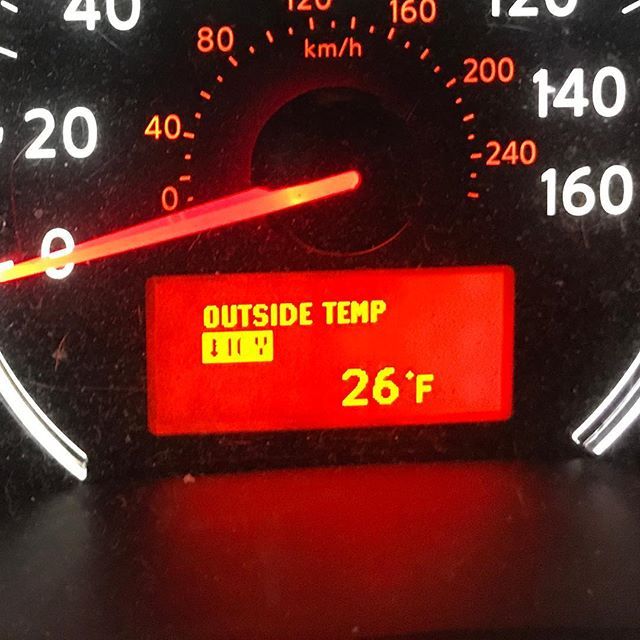
The mornings had been cooler for a few days, but this morning was downright cold. A cold blast of air blew right through me as I walked out the front door, heading to work. When I arrived at my shop, I glanced at the thermometer that hung next to the front door. It read 26 degrees. I shivered, as just knowing the temperature made me even colder. "It is too cold for the middle of October," I thought.

I entered my shop and immediately turned on the 220-volt, 5000-watt space heater. It was the first time I had used the heater since a major renovation of my shop. The heater had taken the chill out of the air in just a few minutes, and I was comfortable working. Before long, it was warm enough to turn down the heater. I'm not too fond of cold weather, but I was excited to see how well my shop would stay warm.

This spring, I started working on my cold, drafty shop. The building is old and needs updating. In several places, the ceiling had fallen, so heat quickly escaped. Some of the siding had rotted away, and you could see outside. The old, ill-fitting garage door left significant gaps. I would stuff old blankets into the cracks to try and keep some heat in the shop. It wasn't easy trying to keep the shop warm.

My friend, Dale, worked hard for most of the spring building and insulating new walls and ceilings. He patiently worked through all the quirks of my old building. Blake at MCW Pro did a masterful job of engineering and installing new garage doors that sealed out the elements. Terry tore off the old siding, replaced rotten studs, put in new insulation, and after installing the metal siding, he spray-foamed and caulked the building. After a thick layer of spray foam insulation was sprayed onto the ceiling, I was sure my shop was ready for cold weather. The final touch was when Gage applied seven gallons of white paint to the interior walls. I was pleased with the results.

I was happy that my shop was now able to hold the heat. It was satisfying to know that I would be able to stay warm this winter. All the hard work and expenses were worth it. It is incredible the difference that insulation and sealing can make. Science and technology writer Chris Woodford explains it this way.

"The real problem with home heating is retaining the heat you produce: in winter, the air surrounding your home and the soil or rock on which it stands are always at a much lower temperature than the building, so no matter how efficient your heating is, your home will still lose heat sooner or later. The answer is, of course, to create a kind of buffer zone in between your warm house and the cold outdoors. This is the basic idea behind heat insulation, which is something most of us think about far too little. According to the US Department of Energy, only a fifth of homes built before 1980 are properly insulated."

The second law of thermodynamics, overly simplified, tells us that energy is always looking to move towards less energy. When we are talking about heating our homes and workspaces, that means energy in the form of heat will always move towards less heat energy unless we intervene and work hard to guard against it. 

Just like we need insulation to keep the heat in our houses, we, as Christians, need to insulate ourselves from the cold of the world around us. Paul explained what I call the second law of spiritual thermodynamics in Romans 7:15-24 (NLT) 

"I don't really understand myself, for I want to do what is right, but I don't do it. Instead, I do what I hate. But if I know that what I am doing is wrong, this shows that I agree that the law is good. So, I am not the one doing wrong; it is sin living in me that does it. And I know that nothing good lives in me, that is, in my sinful nature. I want to do what is right, but I can't. I want to do what is good, but I don't. I don't want to do what is wrong, but I do it anyway. But if I do what I don't want to do, I am not really the one doing wrong; it is sin living in me that does it.

I have discovered this principle of life—that when I want to do what is right, I inevitably do what is wrong. I love God's law with all my heart. But there is another power within me that is at war with my mind. This power makes me a slave to the sin that is still within me. Oh, what a miserable person I am! Who will free me from this life that is dominated by sin and death?" 

The second law of thermodynamics tells us that energy is always looking to move towards less energy. In the same way, the second law of spiritual thermodynamics tells us that our sinful nature will always win if we do not have help from God. Our sinful hearts automatically desire to conform to the surrounding climate of the world. "Our sinful selves want what is against the Spirit, and the Spirit wants what is against our sinful selves. The two are against each other, so you cannot do just what you please." Galatians 5:17 (NCV) "Don't copy the behavior and customs of this world, but let God transform you into a new person by changing the way you think. Then you will learn to know God's will for you, which is good and pleasing and perfect." Romans 12:2 (NLT)

Gentle Reader, Jesus knew the struggle we would face. When He was praying in the garden before His arrest, He prayed for you and me. "I do not pray that You should take them out of the world, but that You should keep them from the evil one." The cold of the world around us will always be trying to get inside us, so we need to have the proper insulation. "Like a bird protecting its young, God will cover you with His feathers, will protect you under His great wings; His faithfulness will form a shield around you, a rock-solid wall to protect you." Psalms 91:4 (VOICE) Ask God to insulate you from the cold of this world so you can stay warm.


Wednesday, October 19, 2022

We'll Get Together Then

My An Arkie's Faith column from the October 19, 2022, issue of The Polk County Pulse.

Harold wasn't at the hospital the day his son was born; his job had taken him out of state. But he didn't miss the birth on purpose. His wife Sandra's due date was two months away. Earlier that day, Sandra had driven him to the airport to catch a flight to Atlanta. On her way home, she began to have premature labor pain and went straight to the hospital, where baby Josh was born just a few hours later. Because of his premature birth, baby Josh needed special care.

Later that day, Sandra called Harold at his Atlanta hotel to tell him that he had a son and that baby Josh would need extended care. It wouldn't be the last time that Harold missed a milestone moment in his son's life. Harold's professional future was looking very bright, but his home life was deteriorating. A couple of years earlier, he had been an out-of-work documentary filmmaker. Sandra remembered those days, "He'd pick up $100 here, $100 there for something but the money ran out. All of a sudden, there was a recession. There was nobody looking for him for a documentary, and that's when he got a hack license. And the day that he got assigned to this garage, three different film jobs came in, and then he did some training films for IBM." Harold never drove a cab, but he turned the idea into a song.

"By late Fall 1970, out of work, I start writing songs again, although in a completely different style," Harold remembered. "My quest for interesting film stories leads me into a narrative form of songwriting. It is fun writing again, and my brothers Tom and Steve, having formed their own group, are willing to perform some of my material. The end of 1970 arrives, there are no film jobs, and the movie industry is an economic disaster area. My daughter Jenny is six months on the way to being born, and I panic. I set into New York City to sign up for a hack license. On the way, I meet an old girlfriend who has married money instead of becoming an actress, and I contemplate the irony of flying in my taxi. But the day I'm supposed to start driving, fate again intervenes, and I'm offered three film jobs. Relieved, I plunge back into work but find that the songs are still coming."

Harold, "Harry," Chapin landed a record deal and released his first album in March 1972. His first single, "Taxi," made it onto Top 40 radio. The story of unfulfilled dreams struck a chord with the public. "She was going to be an actress, and I was going to learn to fly," but neither one of them are happy in their lives. There's this poignant moment near the end where she gives him a twenty-dollar bill, and he no longer has the pride to reject it, stuffs it in his pocket, and goes on.

With newfound success, Harry was touring extensively. Life on the road was lonely, and lady admirers were many. In December 1973, while Harry was in the recording studio, Sandy answered a call from one of Harry's admirers. As she talked, her anger exploded. After getting rid of the female caller, Sandy called Harry at the studio and told him not to bother coming home because their marriage was over. Overcome by the reality that his wife was leaving him, Harry fell into the dark abyss of depression. Despite his unfaithfulness and stupid, selfish behavior, Harry realized how much he wanted Sandy and the kids. 

After repeated apologies and promises that Harry would put his family first, Sandy said that if Harry was willing to change, she was ready to listen. Harry made his family his new number-one priority, and to prove it, he canceled all his western U.S. concert tours to limit his time away from home, and he started coming home the same night after his concerts, catching a red-eye flight. While he was away, Harry called Sandy multiple times daily, giving her updates and telling her he loved her. Not surprisingly, as Harry began to change, so did his songwriting. More and more, he looked to his family for inspiration. 

Around this time, Sandy showed Harry a poem she had written. When he read it, he told her he would put it to music. I'm sure you have heard Sandy's words. "The cat's in the cradle and the silver spoon. Little boy blue and the man in the moon. 'When you coming home, dad?' 'I don't know when, but we'll get together then. You know we'll have a good time then.'"

The song tells the story of a well-meaning but career-driven father. "My child arrived just the other day. He came to the world in the usual way. But there were planes to catch and bills to pay. He learned to walk while I was away." The implication is that his career is his priority, so he begins missing important landmarks in his boy's life. Fast forward to the final verse; the father is retired, but his son has moved away and now has a family of his own. The father calls and says,"' I'd like to see you if you don't mind.' He said, 'I'd love to, dad, if I can find the time. You see, my new job's a hassle, and the kids have the flu. but it's sure nice talking to you, dad.'"

Harry released the single Cat's in the Cradle in 1974. The song reached the top of the Billboard music charts, sold millions, and earned Harry Chapin a Grammy nomination for Best Song. In other words, it struck a chord with people. Just five years later, my daughter was born. I could see myself in the lyrics. Six days a week, I left the house early in the morning before she was awake and didn't get back home until after she was asleep. We moved to Mena, Arkansas, when she was almost two years old. My wife agreed to the move stipulating that I would work fewer hours and only five days a week.

Gentle Reader, in Colossians 3:21 (CJB), Paul wrote, "Fathers, don't irritate your children and make them resentful, or they will become discouraged." Too many of us as fathers have experienced some form of the Cat's in the Cradle experience. Sandy Chapin said, "I think the reason people responded and continue respond is because it is a real-life story and everybody has a piece of that experience. I think today more than ever we need the song to help inspire us as parents to give our children the time the attention and the love that they need. Because, let's be honest it's it's not getting easier to live in this world."  

Wednesday, October 12, 2022

Turkey Track

My An Arkie's Faith column from the October 12, 2022, issue of The Polk County Pulse.


For many years, whenever I traveled to Russellville, Jasper, Harrison, or Branson, I would pass by a large open field with what looked like hundreds of RV camping spaces on Hwy 250. There was a small sign that said Turkey Track Bluegrass music. I wondered why it was there and why I never saw anyone there. 

One day a couple of years ago, I saw a flyer advertising the Turkey Track Bluegrass Festival. I thought that it sounded interesting. I love music, but I had never attended a bluegrass festival. The timing didn't work out, so I couldn't attend the festival. Each year, in the back of my mind, I thought about attending the festival, but it never seemed to happen.

I decided that I would try to go to Turkey Track this year. A few days ago, a Facebook post on my phone showed that Rhonda Vincent would be playing at Turkey Track. I had heard her play at Silver Dollar City in the 80s and followed her career. I called my cousin, who likes bluegrass, and asked him if he would like to go. He said that he would, and we made plans to attend.

I tried to find information about the festival and when Rhonda Vincent would be playing, but I had a hard time. I couldn't find any information on the internet. I finally found a phone number and found out who the performers would be, and the times they would be playing. I arranged my work schedule to leave an hour early and make it to the evening concert on time.

As my cousin and I drove past the Turkey Track venue, we saw hundreds of RVs sprawled out over the countryside. We were amazed by the number of people at the festival. I learned that Turkey Track Bluegrass Park puts on one of the largest bluegrass festivals west of the Mississippi. The festival has been held there for the last 45 years.

We parked and asked for directions to the stage. After finding a place to set our camping chairs, we checked out the craft booths and the food trucks. We settled on a healthy supper of pizza, grilled cheese, kettle corn, and soft-serve ice cream. Soon the evening concert started, with the Roving Gambler Band playing their brand of infectious bluegrass music. Their fun-loving and lighthearted approach to performing kept the audience entertained and laughing.

Walter Schook, the lead singer and guitarist, started the Roving Gambler Band over 30 years ago with friends devoted to the idea that Bluegrass Music should be fun! The infectious laughter and great music were a great way to start the evening. Christine Talley played the upright bass and was a crowd favorite when she sang. Her banter with Walter, the band leader, kept the crowd in stitches.

Next up was SpringStreet. Their musicianship was amazing and featured wonderful vocal harmonies. They started in 1990 when founding members Mike Williams and Steve Carroll went to Eureka Springs to see Bill Monroe, the father of bluegrass music, perform. They decided to start a band and decided on the name SpringStreet because that was the name of the street next to the auditorium where they heard Bill Monroe. Twenty years later, the band has developed its own sound with a combination of bluegrass, gospel, folk, and country, served up bluegrass style.

As talented as the Roving Gambler Band and SpringStreet were, when Rhonda Vincent took the stage she had the audience in the palm of her hand. It was amazing to be sitting in the Arkansas countryside, miles from anything, and listening to an artist who has won seven female vocalist of the year awards from the International Bluegrass Music Association. After listening to great songs like All American Bluegrass Girl and Rhonda's beautiful tribute to Loretta Lynn, Blue Kentucky Girl, she sang a song that was a change of pace and had a message that hit home. 

Her voice rang out over the Arkansas countryside, and her band joined in with backing vocals as they sang, "There are many people who will say they're Christians. And they live like Christians on the Sabbath day. But come Monday morning, till the coming Sunday, they will fight their neighbor all along the way." Then a deep male bass voice sang, "Oh, you don't love God," and Rhonda responded, "If you don't love your neighbor. If you gossip about him, if you never have mercy, if he gets into trouble, and you don't try to help him. Then you don't love your neighbor, and you don't love God."

The song teaches an essential Biblical truth that has been lost in today's Christian culture. In 1 John 4:7,8 (KJV), The Apostle John tells us, "Beloved, let us love one another, for love is of God; and everyone who loves is born of God and knows God. He who does not love does not know God, for God is love." 

In Luke chapter ten, there is a story of a religious expert who tries to trick Jesus. He asked, "what shall I do to inherit eternal life?" Jesus answered, "What is written in the law? What do you read there?" The man answered, "Love the Lord your God with all your heart, all your soul, and all your strength." Deuteronomy 6:5 (NCV) And then he added a passage in Leviticus 19:18 (NCV), and "love your neighbor as you love yourself."

Then Jesus said, "Your answer is right." "' Ah,' said the lawyer, wanting to win the point, 'but who is my neighbor?'" Luke 10:29 (NTE): Often, we as Christians are like the lawyer, trying to find a loophole that doesn't require us to love others. We want to define our neighbor as the person next door who believes the same way we do. But even if we want to narrow the definition of who our neighbor is, Jesus tells us, "You have heard that it was said, 'Love your neighbor and hate your enemies.' But I say to you, love your enemies. Pray for those who hurt you." Matthew 5:43 (NCV)

Gentle Reader, God hasn't asked us only to love those who are similar to us or with whom we are comfortable. We love people by genuinely seeking what is best for them. Loving others does not mean agreeing with everything they say or do, nor does it mean acting in ways that always gain their approval. Loving our neighbors means attending to their needs—both physical and spiritual. As the song says, "you don't love God if you don't love your neighbor."


Wednesday, October 5, 2022

Reconnection

My An Arkie's Faith column from the October 5, 2022, issue of The Polk County Pulse.

It is early Sunday morning, and I am writing an article at my desk. It is quiet in the house, with only the sound of my fingers on the computer keyboard. My dogs have been fed and are now curled together, sleeping on the floor of the living room. The stillness of the morning is interrupted by the ringtone of my cell phone. "Who can be calling me on Sunday morning," I thought as I answered the phone. 

"This is your cousin from Michigan," the voice on the other end of the line said. "We are in Branson for a few days and would like to come see you." As we visited for a few minutes, we tried to remember when we had last seen each other. We couldn't pinpoint the exact time, but it was when we were both young children. Before we ended the call, we made arrangements to meet in a few days.

As we walked out onto Little Italy's back patio, I saw my Daddy seated at a table with a couple. I knew that it must be my cousin and her husband. After greeting each other and the small talk people engage in when meeting someone for the first time in years, we ordered our food. While waiting for our food, we enjoyed the fresh garlic rolls and continued our conversation. Even though we hadn't seen each other since childhood, conversation flowed easily.

We had so many topics of mutual interest that there was never a hint of awkwardness or a lull in the conversation. We reminisced about my grandparents and my cousin's dad. We talked about our kids and grandkids, sharing photos from our phones. Stories and remembrances filled the air and enveloped us like a warm hug. We had a lifetime to catch up on and far too little time.

After we finished our meals, we continued to visit. The sun had gone down, and there was a fall chill in the air. Everyone was cold, but we didn't want the evening to end. There were still stories to be told and remembrances shared. As the evening ended, we determined we had to see each other again. My cousin and her husband talked about coming back to Mena for a more extended visit, and My wife and I said we would like to find a time to visit northern Michigan. After a long goodbye, we said goodnight.

Sometimes you meet a person and just click; you're comfortable with them, like you've known them your whole life, and you don't have to pretend to be anyone or anything. That's the way it was for me with my cousin. Even though we know that we met as children, neither one of us have any real memories of the other one. But now we have a real connection. It is a beautiful feeling to make that kind of connection with someone you haven't known.

Christian author, John Eldredge, writes: "we're told that you can have a relationship with Jesus, but most Christians don't experience Jesus personally like that. They just don't. We honor Him. We respect Him. We worship Him. We don't experience Him and His personality like we do the people we love the most in our lives." But Jesus longs for a real connection with us. 

When Jesus talked to his disciples, he told them, "If anyone loves Me, he will keep My word; and My Father will love him, and We will come to him and make Our home with him." John 14:23 (NKJV) Jesus wants a friendship and intimacy with you as if he was living in your home. He doesn't want to only visit with you for an hour a week with a large group of people. He longs for personal, intimate time with you. 

In Revelation 3:20 (ESV), Jesus says to you and me, "I stand at the door and knock. If you hear my voice and open the door, I will come in, and we will share a meal together as friends." And in John 15:15 (AMP), he says, "I do not call you servants any longer, for the servant does not know what his master is doing; but I have called you My friends, because I have revealed to you everything that I have heard from My Father."

Some Christians feel that friendship with Jesus seems too familiar. I've heard the idea stated, "Jesus is not our friend; he is our King." But we don't have to choose, because both are true. Jesus is our King, and he wants to be our most trustworthy friend. But does relating to Jesus as a friend diminish his authority in our lives? No, because when he calls us friends, he is still our King. He said, "You are My friends if you do whatever I command you." John 15:14 (NKJV) Our obedience doesn't earn friendship but proves our friendship with him.

The 18th-century American preacher, Jonathan Edwards, wrote, "Whatsoever there is, or can be, that is desirable to be in a friend, is in Christ, and that to the highest degree that can be desired." Jesus knows us better than we know ourselves, and he loves us more deeply than anyone else could. We are closer to his heart than anyone has ever been to ours.

God created us for friendships. He never intended for us to be alone. "Two people are better off than one, for they can help each other succeed. If one person falls, the other can reach out and help. But someone who falls alone is in real trouble. Likewise, two people lying close together can keep each other warm. But how can one be warm alone? A person standing alone can be attacked and defeated, but two can stand back-to-back and conquer. Three are even better, for a triple-braided cord is not easily broken." Ecclesiastes 4:9-12 (NLT) 

Gentle Reader, Jesus chose us as friends. He died for us as friends, he wants us to trust him as our friend, and he will remain our friend for eternity. Maybe it has been too long since you had a beautiful evening spending time in conversation with Jesus. Perhaps it's time for you to reconnect with Him. He is standing at the door and knocking. Will you let Him in?


Wednesday, September 28, 2022

Queen Elizabeth II

My An Arkie's Faith column from the September 28, 2022, issue of The Polk County Pulse.

Along with many other Americans, my wife and I watched with viewers worldwide as Great Britain paid a final farewell to Queen Elizabeth II with a state funeral and military procession. Her reign of 70 years and 214 days is the longest of any British monarch and the longest verified reign of any female sovereign in history.

Queen Elizabeth II's coffin was taken in a solemn procession to Westminster Abbey on the State Gun Carriage of the Royal Navy, drawn by 142 sailors. King Charles III walked alongside his siblings, Princess Anne, Princes Andrew, and Edward. The Prince of Wales and the Duke of Sussex followed behind. As the funeral procession entered the abbey, world leaders, politicians, and foreign royalty stood as her coffin was carried up the aisle. 

During the funeral service, The Archbishop of Canterbury Justin Welby said: "People of loving service are rare in any walk of life. Leaders of loving service are still rarer. But in all cases, those who serve will be loved and remembered when those who cling to power and privileges are long forgotten." He also spoke of how the Queen had declared on her 21st birthday "that her whole life would be dedicated to serving the nation and Commonwealth." The Archbishop added: "Rarely has such a promise been so well kept. Few leaders receive the outpouring of love we have seen."

A while ago, I came across a quote by the American author, historian, and Unitarian minister, Edward Everett Hale. He said, "I am only one, but I am one. I can't do everything, but I can do something. The something I ought to do, I can do. And by the grace of God, I will." It is an excellent motto for your life.

Queen Elizabeth II was in a position of power and influence to make a difference in the world. An article in the online magazine The Conversation stated it this way. "Her wisdom and unceasing sense of duty meant she was widely viewed with a combination of respect, esteem, awe, and affection, which transcended nations, classes, and generations. She was immensely proud of Britain and its people, yet in the end, she belonged to the world, and the world mourned her passing." But most people don't feel that they can make a difference. What can just one person do? 

A few years ago. A friend of mine was upset about a situation, and through his actions made a big difference, even though he was an ocean away. I found out what one person can do.

The narrative started back in 1916. The Battle of the Somme was one of the biggest battles of the First World War. Fought near the Somme River in France, it was also one of the deadliest battles in history. On July 1, 1916, 19,240 British soldiers lost their lives. It was the bloodiest day in the history of the British army.

July 1, 2016, marked the 100th Anniversary of the start of the Battle of the Somme. As a tribute to these soldiers, the British Royal Legion issued 19,240 hand-crafted solid brass limited edition golden poppy lapel pins, one for each British soldier who lost his life that day. Each pin came with a certificate featuring details of the individual soldier it commemorated.

The intricate golden pins were made from the brass of melted-down shell fuses found on the Somme battlefields and feature a prominent red center, painted with paint mixed with soil from the same fields. The British Royal Legion sold the pins for £39.99, with all proceeds being used to provide care and support for members of the British Armed Forces and their families. Unsurprisingly the poppies sold out within hours.

My friend, whose Grandfather fought during World War I, tried to purchase one but was unsuccessful. He looked on the British Legion site, but they had all sold out very quickly. He thought, "I bet someone is trying to profit off that," so he looked on eBay and found that there was already one listed, selling for nearly £400.

He said, "one of the sellers I contacted first was so mean and arrogant it just got me angry. It upset him to see opportunists making huge profits off something that had such meaning. He told me, "My Grandfather was in the Cavalry in the great war. The slaughter was incredible as humans fought the first real mechanized war. It was supposed to be the 'War that ended Wars.' Sadly, as we know, this was a forlorn dream."

My friend decided to contact the press in Great Britain. He was nervous when he called the papers, but the British newspaper Mirror published an article about reselling the golden poppy lapel pins, mentioning my friend. He was delighted when the BBC reported on it, and soon eBay removed the golden poppy lapel pins.

One man made a difference. Jude 1:22 (NKJV) says, "And on some have compassion, making a difference." You can make a difference. You can have compassion. You may not contribute to making a change an ocean away, but you can make a difference to someone. John F. Kennedy said, "One person can make a difference, and everyone should try."


In Zechariah 7:9 (GW), God tells us to "be compassionate and kind to each other." Imagine what a difference you could make by simply being kind to others. Several years ago, my young granddaughter walked up to a woman at church and gave her a big hug. This woman lived alone and had a prickly personality. She kept people at a distance. All day long, she kept telling people, "That child hugged me. No child has ever done that before." A simple hug made a difference in her life.

Gentle Reader, small acts of kindness have changed the hearts and minds of others. You can make a difference even if you do not have the power and influence of a monarch. You can influence someone even if you are not a social media influencer. You may be only one, but the power of one can be significant. You can't do everything, but you can do something. Look for opportunities to serve others and find opportunities to thank those that are of service to you. Your gratitude is an act of kindness toward others and can profoundly impact someone. The power of one can change the world! Let kindness and compassion be your superpowers.

Wednesday, September 21, 2022

Chasing Monkeys

My An Arkie's Faith column from the September 21, 2022, issue of The Polk County Pulse.

As I travel, the landscape seems almost otherworldly. The trees along the road are veiled in wisps of fog, and overhead a crescent moon tries to break through the cirrus clouds. The faint moonlight enhances the ghostly, ethereal scenery of the early morning hours. 

As I drive through what seems like a sublime fairyland, I listen to a book on the stereo in my little S-10 pickup. The story appears predictable as a boy in the Ozarks of northeast Oklahoma reminisces about the summer he turned fourteen. But the story heads into bizarre territory when the boy, Jay Berry, and his hound dog, Rowdy, are out looking for the family’s crazy old milk cow, and Rowdy trees an animal in a large oak tree. 

Jay Berry tells the story, “At first, I thought my eyes were playing tricks on me. I just couldn’t believe what I was seeing. It was a monkey—an honest to goodness monkey.” Although it was hard to believe a story about finding a monkey in northeast Oklahoma, I wasn’t surprised. After all, the title of the book is Summer of the Monkeys.

I first heard about the book Summer of the Monkeys by Wilson Rawls when I read about the Mena School District’s reading program, One District One Book. I thought, “The title is interesting; I should read the book.” According to a Polk County Pulse article, “the idea is that the school district, sponsors, households, and community all read the same book, giving them something in common in addition to promoting reading and literacy.”  

The story is written from the perspective of a 14-year-old boy named Jay Berry. His life is full of adventure, exploring the river bottoms near his family’s farm. In the late 1800s, his family had moved from Missouri to Oklahoma to be near his grandparents. His twin sister, Daisy, has a crippled leg, but the family doesn’t have enough money to pay for the surgery she needs.

From the day Jay Berry discovers monkeys in a nearby river bottom and learns that they have escaped from a traveling circus, which has offered a large reward for their capture, he is obsessed with capturing the monkeys. He aims to claim the reward and use the money to fulfill his dream of owning a pony and a .22 rifle. He attempts to capture them using traps and a net borrowed from his grandfather, but the monkeys outsmart him at every turn. After one incredibly intense encounter, the monkeys attack Jay Berry and Rowdy, and they limp home covered in scratches and bites. Daisy spends several days nursing them back to health.

Jay Berry and his grandpa go to a nearby town to visit the library and see if there is a book there that can help them learn how to catch monkeys. They hatch a plan to catch the monkeys using coconuts, but as they return home, the monkeys steal the coconuts. Jay Berry wonders if he will ever be able to capture the monkeys. 

One night, not long after the monkeys stole his coconuts, Jay Berry was sleeping soundly when an earth-jarring clap of thunder awakened him. As the storm intensified, Jay Berry started worrying about his monkey nemeses. The following day, he told his Mama, “I’m going down in the bottoms and see about the monkeys. They could’ve drowned or blown away in the storm. I’m worried about them.”

His Papa asked, “If you find the monkeys, are you going to try to catch them?” Jay Berry answered, “no, I just want to see if they are all right.”

Jay Berry found the monkeys huddled together in a washout in the riverbank, wet, cold, and almost dead. When the monkeys saw that he was trying to help them, they followed him home. From this point on, the story follows a happy ending path. Jay Berry returns the monkeys to the circus and gets the reward. Instead of buying a pony and a rifle, he uses the reward money to pay for his sister’s surgery. But somehow, in the end, he still ends up with a pony and a rifle.

Although the premise seems a bit silly on the surface, the book has an excellent moral. It is about family and what matters most in this life. The book examines broad themes such as not giving up on your dreams, kindness, and love.

As I thought about the book, my mind kept returning to what I feel is the turning point in the book. Jay Berry had compassion for the monkeys on the night of the terrible storm. Instead of viewing them as enemies he must subdue; he worried about them and had compassion for them. From that point on, everything in his life changed from disappointments to all his wishes coming true. The book wraps everything up just a bit too neatly but points out that compassion and kindness are the best approaches.

In Psalms 112:4 (VOICE), the Bible tells us that “when life is dark, a light will shine for those who live rightly— those who are merciful, compassionate, and strive for justice.” Unfortunately, most Christians are not known for their mercy, compassion, and desire for justice. We shout in the public arena, “Everyone should keep God’s law as I see it.” But Paul tells us, “The entire law is fulfilled in keeping this one command: ‘Love your neighbor as yourself.’” Galatians 5:14 (NIV)

In his book Grace for the Moment, Max Lucado offers a pledge that we could all make our own: “Nothing is won by force. I choose to be gentle. If I raise my voice, may it be only in praise. If I clench my fist, may it be only in prayer. If I make a demand, may it be only of myself.”

Gentle Reader, maybe, like Jay Berry, we need to change how we view those we oppose. Instead of viewing them as enemies we need to subdue, we need to consider them with compassion and kindness. As a Christian, kindness can go a long way. It can show others the character of the God we serve. We can show people they are important and created in God’s image through a smile, kind words, and compassion. You may never know the positive impact of your kindness, but “let love and kindness be the motivation behind all that you do.” 1 Corinthians 16:14 (TPT)


Wednesday, September 14, 2022

The Lincoln Navigator

My An Arkie's Faith column from the September 14, 2022, issue of The Polk County Pulse.

I was busy installing a windshield when the phone rang. It seems that if I am applying the urethane to a vehicle or setting a windshield in place, there is a good chance that the phone will ring. I laid down my urethane caulk gun and picked up the phone. "Last night, I broke the window in my Lincoln Navigator, and it has shattered into a thousand pieces," said the voice on the other end. "I need to get it replaced before it rains. How much will it cost?" "Let me get into the office where I can look it up," I answered. After getting all the information and pricing the glass, I told him, "That is an expensive piece of glass. It will cost $550.00 for the glass and installation. My supplier has the glass in stock, and I can have the glass here on Tuesday." "Well, I have to have it," he answered. "Go ahead and order it, and I will bring the Lincoln in on Tuesday to get the work done. Do you want me to come by and pay for it before you place the order?" I told him that it wasn't necessary to pay for it before I completed the job.

About an hour later, the customer with the Lincoln Navigator drove up to my shop. "I want to pay you for the glass," he said. I told him that it wasn't necessary, but he insisted. "Thank you," I said. "That is very thoughtful of you." He wrote me a check, handed it to me, and drove away.

My supplier delivered the Lincoln glass to my storage unit in DeQueen, and on Tuesday morning, I drove to DeQueen and picked up the glass. We had scheduled the job for Tuesday, but the customer didn't show up to get the glass installed. It was a busy day, and I didn't have time to think about it until late that afternoon. I called the customer but only got his voicemail. I left a message telling him that the glass was in and asked him to give me a call to reschedule. I thought it was unusual because it had been so important to him to replace the glass before it rained, but I didn't worry about it because he had prepaid for the job. I didn't hear from him for the rest of the week.

Two weeks went by before I heard from the customer. Finally, he called, and we made an appointment to install the glass. I was glad to have the job completed, but I was surprised that he waited so long to have the work done, especially since he had already paid for it.

In my warehouse, there are quite a few pieces of glass that customers have special ordered over the years but never came to get the work done. It is a frustrating and costly part of the business. But I also have several pieces of glass that customers have paid for but have never picked up. I am puzzled that someone would pay for a piece of glass and then never pick it up.

I am also puzzled that more people don't accept God's grace since the price is already paid. The Bible is clear that God's grace is a gift. Why don't more people take advantage of the gift? If you were to ask one hundred random people, "how do you get to heaven?" you would hear many different answers. Things like "try to be good and do your best," "work hard at being a good moral person," or "do more good things in life than you do bad things." The basis for each of these ideas is reliance on our abilities and actions. These ideas are not based on the idea that heaven is a gift. People who think they have earned their way and don't need the gift see no need to accept God's grace. 

Many Christians fall into this way of thinking. They believe they can do it themselves and don't need a gift. A survey conducted by the Cultural Research Center at Arizona Christian University finds that fifty-two percent of Americans who describe themselves as Christian believe they can earn their salvation through good works. Because of this mindset, some feel strongly that no one should receive assistance. 

In 1 Corinthians 6:20 (NCV) Paul tells us, "You were bought by God for a price. So honor God with your bodies." God paid the price of his Son to purchase your salvation. "He suffered the things we should have suffered. He took on himself the pain that should have been ours. But we thought God was punishing him. We thought God was wounding him and making him suffer. But the servant was pierced because we had sinned. He was crushed because we had done what was evil. He was punished to make us whole again. His wounds have healed us." Isaiah 53:4,5 (NIRV)

Jesus suffered for you. He took on himself the pain that should have been yours. Your sins were the ones that pierced him. He paid the price to heal you and make you whole. He has paid your debts—all of them. Jesus died for you. If you accept the gift of grace, the stain of sin on your life is washed white as snow.

John 19:28-30 (NCV) tells the story of the last moments of Jesus' life on the cross. "After this, Jesus knew that everything had been done. So that the Scripture would come true, he said, 'I am thirsty.' There was a jar full of vinegar there, so the soldiers soaked a sponge in it, put the sponge on a branch of a hyssop plant, and lifted it to Jesus' mouth. When Jesus tasted the vinegar, he said, 'It is finished.' Then he bowed his head and died."

Gentle Reader, Jesus said, "It is finished" on the cross. He paid in full all the costs required to forgive our sins. And when we place our trust in him, our sin debt is forever wiped off the books! We all need the gift of grace. We all need to have the penalty paid for our sins. The Bible says, "All have sinned and fall short of the glory of God" Romans 3:23 (NIV) and that "the wages of sin is death, but the gift of God is eternal life in Christ Jesus our Lord." Romans 6:23 (NKJV) We all need the gift of God, eternal life. "For by grace you have been saved through faith, and this is not your own doing; it is the gift of God." Ephesians 2:8 (NRSV) Don't be too proud to accept the prepaid gift of grace.


Sophie's Journey - Chapter 31- Lost in the Willows

 Sophie's Journey - Chapter 31 Lost in the Willows The ringing of axes traveled through the encampment. Anne stirred, pressing close to ...