Wednesday, April 13, 2022

Domira

My An Arkie's Faith column from the April 13, 2022, issue of The Polk County Pulse.

It was a beautiful fall day in 1994, and we were sitting on the front porch of our new home enjoying the evening. We heard the phone ringing, and my wife got up and went inside the house to answer the phone. Picking up the brick-sized cordless phone, she pushed the talk button and said, “hello.” Our daughter replied, “Mama, I need to talk to you about Thanksgiving. Can I bring someone home with me?”

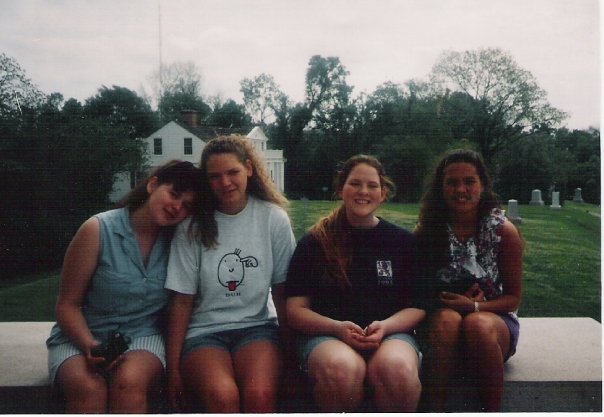
Our daughter was attending a boarding school in northwest Arkansas. That evening, the dean had come to her with a request. “Domira, a new foreign exchange student from Ukraine, has just arrived at school and doesn’t know anyone yet,” the dean said. “Do you think she could spend the Thanksgiving holiday with you and your family?” “I will ask my parents,” my daughter replied.

When our daughter told us about the foreign exchange student and her need for a place to stay over Thanksgiving, we told her the girl was welcome at our house. Domira spent Thanksgiving with us, and we enjoyed getting to know her and learning about Ukraine. She experienced her first shopping experience in the U.S. at the Mena Wal-Mart. She told us that she would have to go to separate shops for milk, bread, fruit, etcetera at home. When Domira first saw our home, she wanted to know how many families lived there. She was surprised when we told her that only our family lived there.

When Russian troops invaded Ukraine and headed for Kyiv, we were concerned for Domira’s safety. We had kept up with her through social media, but there was no information from her. We were relieved when Domira posted a video telling her harrowing story and letting us know she was safe on the seventh of April. I wanted to share her story with you, my readers. Here is Domira telling her story in her own words.

“Thank you, my dear family and my friends, so much for your support and prayers. It means a lot to me and helped me go through what I went through. I’m sorry I couldn’t answer all your phone calls and messages. I know that it’s not easy to understand everything going on now.

My apartment is located on one of the main streets where everybody gets into the city and gets out. Most of the time, between 6:30 and 12:00, we have a traffic jam because people outside of Kyiv are trying to get to Kyiv to get to work. At 6:30 in the morning on the twenty-fourth of February, everything stopped. Not a single car was trying to get here. But at the same time three lines were just packed; Three lines that wanted to get out of Kyiv. All those cars and buses, everything was just full, and I knew that it was impossible to get out of here by car or bus.

I went to the train station, and it was also full. At the same time, our bank system was shut down, so that means that you cannot buy any tickets online, you cannot pay by card, and you cannot buy any food or anything if you don’t have cash. So everybody was trying to get cash from the bank and we had lines of about 20-30 people who were trying to stay in the line to get some cash.


On the first day, I heard my first sirens. I’ve never heard in my life such a crazy sound. When I was trying to get home, I was almost there. I just needed a couple of minutes to get to my apartment when I heard the sirens; that meant that the bombing was starting the second time. When I looked around, everybody was just in panic, running around trying to find the safest place. Since that time, we have had sirens almost every hour. Sirens mean that somewhere there was a bombing and there were explosions. I could not get home that day. I couldn’t get home to get the most important things. That means that everything you packed in five minutes, everything that you can take with you in just one suitcase or one bag. You pack all your life in five minutes in one bag and just try to go somewhere in a safe place.

I knew that in the same day it was impossible for me to get out of here, and I went to see my friend. She stayed by herself, and she was also scared and panicked, so we stayed overnight there. The next day at 7:30 in the morning, we tried to get out of Kyiv. We heard sirens all night and shooting. We knew that we could not stay here; we had to get out. We knew that it was impossible to get out on the Main Street and the main highway. So we needed to find the small roads and get through the small towns, somehow, someway, to the place where it’s going to be not so far from Romania where it’s safe. We don’t know how we’re going to get there. We don’t have any plan, I guess nobody had, we just needed to go.

We got in the car and started to drive. It took us twenty hours to get to Chernivtsi. We went through small villages and towns on the way. We saw many tanks and military, and sometimes we didn’t even know if it was Russian military or Ukrainian. We drove through small towns and villages, and we drove through the forests and places that had no lights at all. We heard explosions all the time, but we had no idea when we were going to get to Chernivtsi or if we would get there. Because every time you hear an explosion, every time you see a tank somewhere, you don’t know if that’s your last minute, or if you’re going to make it, or if you’re going to still be alive. For twenty hours, it seemed like it was just impossible.

We got to the safe place at about 4:00 o’clock in the morning, and I just wanted to check the news to see what was going on in Kyiv. I saw that just a couple of minutes from my apartment, in the same place where I walked just a few hours before, Russian tanks had destroyed everything that’s around there. I know that I am one of the blessed people; that had a chance to get out and be in a safe place.

I know so many kids and women that were just trying to get out of Kyiv or many other places, and they were shot. They didn’t have a chance. It’s hard to understand and explain what’s going on and why kids were killed, why women were killed, and why they were raped. It’s especially hard to understand why some family members and some of your friends don’t believe you when you tell them what’s going on. I am not going to lose my energy explaining to somebody who doesn’t believe that the war is going on, that people were killed and I was one of them who could have been shot.

I’m just praying with everybody else that Ukraine will survive. We are praying and dreaming about the day when the war is going to stop. We are dreaming about the time when families can reunite. We’re dreaming about the time when Ukraine is going to be rebuilt. But so many people were killed, and you can’t forget that. I know that I can do as much as I can from my side, and I’m trying every single day to support and help people who stayed in Kiev and different parts of Ukraine. If you have a chance to help in any way, if you want to support, you can write me or you can call me. Thank you for your prayers. Thank you that you believe. God bless you.”

Gentle Reader, those affected by the war in Ukraine are not just nameless people. Please pray for Domira and all of the Ukrainians. “First and foremost, I urge God’s people to pray. They should make their requests, petitions, and thanksgivings on behalf of all humanity. Teach them to pray for kings (or anyone in high places for that matter) so that we can lead quiet, peaceful lives—reverent, godly, and holy.” 1 Timothy 2:1,2 (VOICE)


Saturday, April 9, 2022

A Matter of Time


I own an auto glass company in Mena, Arkansas, and two or three times a week, I get up early and drive one hundred miles to pick up windshields and auto glass. There are no suppliers who will deliver to Mena, but there is a company that delivers to DeQueen. I rent a storage unit in DeQueen, and my supplier delivers to my storage unit and I drive to DeQueen early in the morning to load my truck and be back in Mena in time to open my business.

On the mornings that I pick up my auto glass order, the alarm rings at 4:30 am; I never worry about the alarm going off. My cell phone knows what time it is and always wakes me up, even if the electricity has been off during the night. But it hasn't always been so easy to measure time.

Since Creation, we have measured time by observing the natural world. Ancient men watched the change of the seasons and tracked the heavenly bodies across the sky. In Genesis 1:4, God said, "Let there be lights in the firmament of the heavens to divide the day from the night; and let them be for signs and seasons, and for days and years."

Thousands of years ago, men and women in what is now central Europe tracked the moon and stars by carving notches into mammoth tusks. From Stonehenge to Mayan Temples to the ancient Chinese Observatory at Shanxi, ancient people used these structures to observe the sun and use it to mark the different seasons of the year.

The measurement of time began with the invention of sundials in ancient Egypt before 1500 B.C. The time the Egyptians measured was not the same as today's clocks measure. For the Egyptians, the basic unit of time was daylight. They broke the period from sunrise to sunset into twelve equal parts, giving us the forerunner of today's hours. As a result, the Egyptian hour was not a constant length of time, as is the case today; instead, as one-twelfth of the daylight period, it varied with the length of the day. So, summer hours were longer than winter hours. Time wasn't able to be measured during the hours of darkness.

The need to measure time independently of the sun eventually gave rise to various devices, most notably sandglasses, waterclocks, and candles. Though their accuracy was never great, these devices provided a way to measure time without the need for the sun to be visible. 

For most of history, ordinary people did not have regular and easy access to any time measuring device whatsoever, other than to glance at the sky on a sunny day and see where the sun was. For them, time, as we understand it today, did not exist. Mechanical timepieces existed as far back as 1000 A.D. By the 14th century, public clocks appeared across Europe. Between 1371 and 1380, public clocks were introduced in over 70 European cities. These clocks were not very accurate. Christiaan Huygens made the first pendulum clock in 1656. His timepiece had an error of less than 1 minute a day, and his later refinements reduced his clock's errors to less than 10 seconds a day.

With accurate clocks, people could correlate their activities to a far greater degree. The ability to measure time mathematically helped prepare the way for the scientific revolution. During the 16th and 17th centuries, people's lives began to be influenced by mechanical time. Most of the population would continue to look to the sun to tell the (approximate) time, but the clocks provided the definitive time. 

Time measurement was still haphazard well into the 19th century, with time being kept differently in each community. In the United States, there were over 140 local times in 1883, resulting in slight time differences between adjacent towns and cities. Around this time, influential business leaders, politicians, and scientists wanted to replace the world's impossible patchwork of local times with a universal system of territorial mean times. At the 1884 Prime Meridian Conference in Washington, D.C., diplomats envisioned a world divided into 24 zones, each with a single mean time determined by astronomers at the Royal Observatory in Greenwich. The world was beginning to get a handle on standardized time.

But it still wasn't easy to coordinate with Greenwich Mean Time. One enterprising London family had a solution. Every Monday, Ruth Belville stood at the entryway of a London watchmaker. Ruth was in the unusual business of selling time with her watch named Arnold. When the door opened, the storekeeper greeted the weekly visitor with "good morning, Miss Belleville; how is Arnold today." Ruth replied, "good morning. Arnold is one-tenth of a second fast." Then she reached into her handbag, grabbed a pocket watch, and passed it to the watchmaker. He used it to check the store's central clock and then returned the pocket watch to her.

Once a week, Ruth would get up early and take the three-hour journey from her cottage west of London to the Greenwich Royal Observatory, reaching its gate by 9:00 am. She rang the bell and was greeted by the gate orderly, who formally invited her inside. There she would hand over her watch, Arnold, to an attendant. The officials compared Arnold to the observatory master clock, then returned the timepiece to Ruth with a certificate stating the difference between its time and their central clock. Ruth walked to the Thames and caught a ferry to London with the official document in her hand. She then began making the rounds, visiting her customers.

The Belville family fell into this business accidentally. In the 1830s, Ruth's father, John Belleville, worked at the Greenwich Observatory as a meteorologist and astronomer. The observatory leadership grew frustrated by the many interruptions caused by local astronomers desperate to know the precise time for their observational work. Instead of having unannounced visitors coming to the Observatory and disrupting their scientific activities, they devised a plan to bring the time to those who needed it. They gave John Belville the task of providing time to nearly 200 customers.

Each morning, John went to Greenwich Observatory and set his watch, a very accurate timepiece he nicknamed Arnold, to Greenwich Mean Time. He would then set off in his buggy and set the clocks correctly for clients subscribed to the service. The watch he called Arnold was formerly known as John Arnold number 485 and named after its maker. It was a highly accurate pocket watch built in the late 1700s. John Arnold originally designed Number 485 as a gift for the Duke of Sussex. The Duke thought the timepiece was too large and refused it. The watch ended up at the Greenwich Observatory.

John Belville continued this service until he died in 1856. His widow, Maria, continued the business until her retirement in 1892, when she was in her eighties. Ruth Belville then took over the business. She continued the business until 1940. Ruth was in her eighties when she retired. At 86, Ruth could still make the twelve-mile journey and arrive at the Observatory by 9 am.

When Ruth and Arnold were retiring from the time business, a clock was installed in the United States that consistently drew a crowd. In 1939, New Yorkers headed downtown to get the precise time at 195 Broadway in Manhattan. The art deco clock sat in the window of the AT&T corporate headquarters. It was not just any clock; it was the most accurate public clock in the world. A unique piece of quartz crystal provided its accuracy. Every day, hundreds of pedestrians stopped in front of the clock and held their fingers on their watch stem, waiting for the sweeping second hand to reach the top so they could set their watch accurately. Quartz clocks and watches were sold in large quantities during the 1970s when technological advances made them affordable.

But before long, there were even more accurate clocks. Lord Kelvin first suggested using atomic transitions to measure time in 1879. Louis Essen and Jack Parry built the first accurate atomic clock in 1955 at the National Physical Laboratory in the U.K. Atomic clocks are highly accurate, with an error of only 1 second in one hundred million years. Today we can all have the accuracy of an atomic clock by purchasing a clock that automatically synchronizes itself to the atomic clock in Boulder, Colorado. I have one in my home, and you probably do too.

Why do we place such emphasis on measuring time? Some 200 years ago, Benjamin Franklin wrote, "Dost thou love time? Then use time wisely, for that's the stuff that life is made of." Being able to measure time helps us to use it wisely. Because of the fragile nature of time, Moses prayed, "So teach us to count our days that we may gain a wise heart." Psalm 90:12 (NRSV) That is another way of saying it is the use, not the length, of our days that counts.

Ephesians 5:15-17 reads,  "Consider carefully, then, how you walk, not as unwise people, but as wise people. Make the most of your time, because the days are evil. For this reason, do not be foolish, but understand what the will of the Lord is." These verses seem to be in the back of my mind a lot. Maybe it's because I feel guilty for spending too much time on the Internet or watching T.V. Obviously, these words apply to everyone. We will all be held accountable for the way we spend the precious time God has given us, but I feel like these words have special meaning for me.

In a prayer of Moses recorded in Psalms 90, we find this plea, "Teach us to use wisely all the time we have." How can we use our time wisely? Let me suggest four steps I have found helpful.

ONE – Look at each day as a gift from God. Instead of seeing each day as a burden, see it as another opportunity God has given you to serve Him. Time isn't inexhaustible, nor can we assume we'll always have more; someday, our time on earth will end. The psalmist said, "My times are in your hands" Psalm 31:15. The first thing we should do when we awake is to thank God for the gift of another day.

TWO -- Commit your time to God. God gave it to you: not to be wasted or mishandled, but to be used for His glory. We are accountable to Him for how we use our time, and once a minute passes, it can never be reclaimed. How can we put this into action? Ask God to help us schedule our time more wisely and efficiently. It may mean rethinking how we spend our time and adjusting it to reflect God's priorities. We may also need to examine why we're so busy. Is what we are doing necessary – or are we simply trying to impress others? We can't do everything -- sometimes, we need to say no.

THREE -- Set aside time for God and others. No Christian would say, "I'm too busy for God," but how often have you gone through a whole day without thinking about Him? How often have you ignored someone who needed your encouragement or help? Why is this? One reason is that we relegate God to our spare time – but never have any spare time! In other words, we mentally list everything we must do and put God at the bottom of the list. But the opposite should be the case. Jesus said, "more than anything else, put God's work first and do what he wants. Then the other things will be yours as well." Matthew 6:33 (CEV) 

FOUR -- Take time for your own needs. We all need rest and recreation; God made us this way. Some people feel guilty if they take a vacation or even a few hours off, but they shouldn't. During a hectic schedule, Jesus told His disciples, "Let's go off by ourselves to a quiet place and rest awhile." He said this because there were so many people coming and going that Jesus and his apostles didn't even have time to eat. Mark 6:31 (NLT) If Jesus required rest, don't we also? Someone chronically exhausted from lack of sleep is much more susceptible to Satan's attacks.

I want to close today with a story. The winter day was cold, and even though it was freezing outside, a crowd was gathering. You could feel the anticipation in the air. A young man named Louis was standing in the crowd. He was so excited that he could hardly contain himself. He thought that he might witness history in the making.

The newspapers had been speculating about the event. They questioned whether a man could go that fast on land and survive. They wondered if the vehicle could go that fast without falling to pieces. Everybody seemed to have an opinion; engineers, scientists, doctors, and the man in the street. Today was the day that the questions would all be answered. Louis was excited that he was going to see it.

A gasp rose from the crowd when the machine was introduced. Louis had never seen such an incredible machine. It looked like it was from the future. He watched the driver get into the machine. He couldn't believe what he was witnessing. Louis felt the ground shake when the engine in the machine roared to life. Soon the machine took off, accelerating to an unbelievable speed. Louis and everyone else watching were amazed by how fast the machine went.

When the demonstration was over, both the machine and the driver were fine. When it was announced that a new world speed record had been set, the crowd cheered. The machine had just reached the speed of 39 miles an hour. Wow! That doesn't seem very impressive today. If somebody ahead of us on the highway is creeping along at 39 miles per hour, we're ready to pitch a fit and scream, "Let's go, come on! I don't have all day."

But back in 1898, the world was amazed when somebody went 39 miles per hour. Can you imagine what Louis would think of the latest record for land speed, set by a jet-powered car blasting across the Black Rock Desert in Nevada at more than 763 miles per hour? And, of course, it's only a matter of time before someone will break that record.

In this modern world, no matter how fast we get, no matter how efficient we become, it's just never enough. There's just no question about it; we're doing things faster and faster and faster, at speeds our ancestors couldn't even imagine. Even though we're moving at speeds that our ancestors would think were miraculous, even supernatural, most people still complain about the same thing. No matter what we do or how fast we do it, the complaint is always the same. We don't have enough time.

That's a problem God anticipated. Thousands of years ago, God gave us a commandment specifically created to protect us from the tyranny of time. If you study the fourth commandment, you'll find it comes to us right from the opening chapters of the Bible, right in the story of Creation. At the beginning of our human history, the Lord carved out a refuge called the Sabbath.

Let's go back to the beginning, right after God created the world. The Bible says in Genesis 2:1-3, "Thus the heavens and the earth, and all the host of them, were finished. And on the seventh day God ended His work which He had done, and He rested on the seventh day from all His work which he had done. Then God blessed the seventh day and sanctified it, because in it He rested from all His work which God had created and made."

The Sabbath is good news because it gives you this block of time that can be dedicated to God and to the people you love. Shaun Boonstra of The Voice of Prophecy says that "to devote one-seventh of our lives to rest is just as much a commandment of God as the prohibitions against murder, adultery or stealing." With the Sabbath, God is giving us a special place in time, a sacred place, where the things of this world—our job, the bills, the chores—are not allowed to intrude because this is a sacred and holy time.

I ask you today, is the Sabbath a day of rest for you? That is what God designed it to be. He was afraid you would forget, so he said to remember the Sabbath day. Remember that God wants to spend time with you. Remember that he wants you to spend time with your family. Remember that God wants you to take the time to rest from your work and your worries. Hebrews 4:9-11 says, "So there remains a Sabbath rest for the people of God. Anyone who enters God's rest will rest from his work as God did. So let us do our best to enter that rest."

Wednesday, April 6, 2022

Red, Red, Robin

My An Arkie's Faith column from the April 6, 2022, issue of The Polk County Pulse.

The weather alert blared on my phone as I ate my breakfast. A tornado warning was in effect for areas of Polk County. I pulled chairs into our downstairs hallway safe place, the only place in our house without exterior walls and windows. We sat in the hallway, watching the live feed from KATV. The path of the storms seemed to be heading right towards us. With the memories of experiencing two tornadoes in the back of our minds, tornado warnings are always a stressful time.

As the winds intensified, lightning flashed, and heavy rain began to fall, we could hear the tornado siren wailing in the distance. The storms were very fast-moving, and before long, they raced through Mena and pushed on to the northeast. We breathed a sigh of relief when the weatherman assured us that the storms had moved past us and we were in the clear. When the tornado warnings expired, I headed to work, arriving a few minutes late.

When I heard a crash that seemed to rattle the sheet metal on my shop building, my nerves were still a bit on edge from the morning's storms. "What could that be," I wondered. "Did a branch from a tree hit the shop?" I walked outside but couldn't see anything that could have caused the sound. A few minutes later, I heard it again. It sounded like a dull thud that rattled the tin siding. "That is very strange," I thought, but I was too busy to investigate.

The mystery was solved when I walked past the shop window just as a robin crashed into it. The crash was so violent that I looked out the window to see if the robin was hurt, but he was sitting on a branch near the window. He would fly from the tree and crash into the window every so often. 

When I arrived at work the following day, the robin was sitting in the tree just outside the shop window. He spent the day repeatedly flying into the glass. All through the day, I heard the robin hitting the window. Four days later, he was still sitting in the tree outside the shop window and attacking the glass.

When I researched the reason for the robin's behavior, I found that "the root of this behavior is territorial," according to the Mass Audubon website. "When birds select a nest site, the surrounding area becomes their territory, and they defend it vigorously. Bird territories vary in size depending on the bird species and available resources. A typical suburban songbird such as an American Robin needs only a small backyard. When a bird, searching for a nesting site, accidentally sees its image in a reflective surface on its territory, it mistakes it for a rival and tries to drive the "interloper" away. This activity may continue throughout the breeding season."

As I watched the robin battering the window day after day, I thought about my own experience and the times that I have attacked a phantom menace repeatedly. Anger and bitterness seem to make me irrational. I beat myself up by constantly crashing into the window of these emotions. It feels like my life is spinning out of control, and I can't make sense of it anymore. When I feel like I have been wronged, my feelings often intensify as I dwell on the situation. The more I think about it, the angrier I become. Bitterness begins to consume me if I can't get my feelings in check.

When I find myself crashing into the window of anger, bitterness, and hatred, I remember Paul's counsel found in Ephesians 4:26,27 (NIRV). "When you are angry, do not sin. Do not let the sun go down while you are still angry. Don't give the devil a chance." Some things make us angry. People mistreat us. We witness injustice in the world. But when we dwell on these things and hold a grudge, it gives the devil a foothold in our lives. When we continue to bash into the window of our anger, it can consume us, and if we can't control it, it will destroy us. Paul continues his counsel in Ephesians 4:31,32 (NIRV); "Get rid of all hard feelings, anger, and rage. Stop all fighting and lying. Don't have anything to do with any kind of hatred. Be kind and tender to one another. Forgive one another, just as God forgave you because of what Christ has done."

People hurt us, and life can be unfair. Sometimes anger is justified. But when we hang on to the anger and bitterness, it can be like repeatedly bashing our head against a window. God asks us to forgive to help us heal. But too often, we perceive forgiveness as condoning the behavior. Does forgiveness eliminate accountability or the need for restitution? If I have forgiven, can I still hold the person accountable for their actions? Some Christians teach that forgiveness and accountability are mutually exclusive. That holding someone responsible means that I haven't forgiven them. But that is not the message of the Bible. Even when God forgives us, there are still consequences. He still expects us to make things right as best we can.

Forgiveness doesn't mean you're obligated to stay in a relationship with someone who has destroyed the foundation of everything you've built. Forgiveness doesn't mean you keep a close friendship with the person who betrayed you. Forgiveness doesn't mean you continue to engage with people who have repeatedly proven their disloyalty.

Forgiveness means you accept the wrongs against you, let go of those wrongs, calm your heart with God's love and patience, and begin again—with or without that person, it's up to you. You are no less of a person for knowing when you need distance from people who have broken you. You are not spiteful, hateful, bad, or evil for removing yourself from a toxic relationship and taking time to heal. You are not wrong for setting boundaries and leaving that person in your past.

Gentle Reader, "try to understand other people. Forgive each other. If you have something against someone, forgive him. That is the way the Lord forgave you." Colossians 3:13 (NLV) God wants us to let go of our anger and forgive. He doesn't want us to hold a grudge because he knows it is toxic. But he permits us to remove ourselves from unhealthy relationships and situations. Don't be like the robin and continually crash into the window of anger. "Walk away from the evil things in the world—just leave them behind, and do what is right, and always seek peace and pursue it." 1 Peter 3:11 (VOICE)


Wednesday, March 30, 2022

Unknown Treasure

My An Arkie's Faith column from the March 30, 2022, issue of The Polk County Pulse.

The old woman sat quietly in her kitchen as she ate her breakfast. Thoughts and memories from ninety years of life pressed in on her as she looked around the room. There were so many memories in this house. The pretty young French girl who had seen firsthand the horrors of war gave way to a strong resilient woman. But now her body was failing her, and she would no longer be able to stay alone in the house that she loved. How would she be able to let it go?

La tartine, a quarter baguette sliced horizontally and toasted, was on the small table in front of her. She spread butter on the tartine absent-mindedly and reached for the sour orange marmalade. She would spread marmalade on one piece of tartine, but she would save the other piece to "dunk" into her café au lait. This was her breakfast almost every morning. 

As she sat there, deep in thought, her eyes rested on the miniature painting hanging above the hotplate in her kitchen. For many years, she had looked at the tiny eight by ten painting depicting a scene from Christ's passion and crucifixion every day as she prepared her meals. She thought it was an old knockoff of a medieval painting, but she liked it, and it gave her comfort. It reminded her of her faith and what Jesus had suffered for her.

Today the appraiser from the auction house will be meeting with her. She knew that she would have to sell her house and many of her belongings, but tears welled up in her eyes as her emotions wrapped around her. The thought of leaving her home of so many years was devastating. How could she leave so many memories? Why did life have to be so complicated?

When the appraiser from the auction house arrived, she walked through the house, making notes. When she saw the miniature painting hanging in the kitchen above the hotplate, she was intrigued. Art wasn't her area of expertise, but she suggested bringing the painting to experts and performing a series of tests using infrared light to determine its age and worth. She told the old woman, "If it is as old as I think, your painting may be worth more than 100,000 dollars.

Specialists at the Turquin gallery in Paris initially examined the painting and concluded it was around 700 years old. Further tests indicated that the painting was by the famous pre-Renaissance Italian painter Cimabue. The piece is part of a series of paintings created in 1280, depicting Christ's crucifixion. Cimabue is widely considered the forefather of the Italian Renaissance. He broke from the Byzantine style popular in the Middle Ages and began to incorporate elements of movement and perspective that came to characterize Western painting. 

The painting's discovery sent ripples of excitement through the art world. Philomène Wolf, the auctioneer who discovered the painting, recounted, "I had a week to give an expert view on the house contents and empty it. You rarely see something of such quality." She continued, "I immediately thought it was a work of Italian primitivism. But I didn't imagine it was a Cimabue." 

The auction house estimated the sale price of the painting to be 4 million to 6 million dollars. But when the hammer came down and the painting was sold, the final price was over 26 million dollars. Dominique Le Coent of Acteon Auction House, who sold the masterpiece to an anonymous buyer, said the sale represented a "world record for a primitive, or a pre-1500 work. It's a painting that was unique, splendid, and monumental. Cimabue was the father of the Renaissance. But this sale goes beyond all our dreams." Experts were off the mark because it was the first time a Cimabue had ever gone under the hammer. "There's never been a Cimabue painting on sale, so there was no reference previously on how much it could make," Le Coent explained. "When a unique work of a painter as rare as Cimabue comes to market, you have to be ready for surprises."

I'm sure that the morning the old woman reminisced as she ate her breakfast and waited for the appraiser to arrive, she had no idea what was in store. She was completely unaware of the value of the simple painting hanging above her hotplate. For many years, millions of dollars were hanging on her kitchen wall. I can't imagine the emotions that ran through her when she discovered the value of the painting.

In Psalms 119:162 (NCB), David wrote, "I rejoice in your word like one who discovers a great treasure." Movies, books, and television programs about pirate treasure excite us. Pirates amassed fortunes of gold, silver, and jewels, and some of those riches still have not been found. My wife is intrigued by the mystery of Oak Island. Treasure hunters have been digging on this small Canadian island for over two hundred years, looking for pirate treasure. Many tantalizing clues have been found, but no actual treasure.

But there are far more valuable treasures than anything you can find in a buried treasure chest, sunken pirate ship, or unknowingly hanging on your wall. Those treasures are in the Bible. "Your teachings are worth more to me than thousands of pieces of gold and silver." Psalms 119:72 (NCV) If you are like most English-speaking people, you probably already own at least one Bible. A 2015 survey commissioned by the American Bible Society found that 88 percent of Americans own at least one Bible, and 79 percent consider the Bible sacred or holy. About 36 percent of those surveyed said they read the Bible at least once per week. 

However, merely owning a Bible is not enough. Even though most Americans own one or more Bibles, their knowledge of Scripture is sadly lacking. A 2010 survey by the Pew Research Center demonstrated that only 45 percent of Americans knew the names of the four Gospels. 

Gentle Reader, you have a priceless work of art in your home. It is the Bible, and what it contains is very literally the difference between eternal life and eternal death. Don't fail to recognize the value of that one ordinary book. It's the most valuable thing you own. "My goal is that your hearts may be encouraged and strengthened. I want you to be joined together in love. Then your understanding will be rich and complete. You know the mystery of God. That mystery is Christ. All the treasures of wisdom and knowledge are hidden in him." Colossians 2:2,3 (NIRV) paraphrased. You have a treasure in the Bible "worth more than thousands of pieces of gold and silver." Psalms 119:72 (NCV) Don't let it remain an unknown treasure.


Sunday, March 27, 2022

So Did I


My Grandpa Lawry loved to tell stories, sing, and recite poetry. Some of my fondest memories of my childhood were spending time with my Grandpa and listening to him. One of my favorite poems that he would recite is "So Did I." Recently I found a digital copy on the internet of the book, Uncle Charlie's Poems, written by Charles Noel Douglas that includes the poem. Reading "So Did I," and reminiscing about my Grandpa made me miss him.


SO DID I - Charles Noel Douglas


That long, lank dude as sparks our Sue was to the house last night,

An' talk of having fun, well, say, I thought I'd die outright.

Laugh, well, I'm a-laughing still, I guess I'll never quit;

I've only got to think, an' then I durned nigh have a fit.

He came to supper, an' we had, o' course, a dandy spread.

Sue trotted out her chocolate cake, an' Mom her fancy bread.

An’ that long dude he stuffed hisself with cake, preserves an' pie,

An' then drank sixteen cups o' tea, an' so did I.


Jim Snaggs he eat, an' eat, an' eat; my, how that dude did stuff,

Till every plate was cleared, then Jim he guessed he'd had enough.

Most folks in love don't eat at all, but Jim ain't one of such,

For he allowed love always made him eat just twice as much.

Up from his chair Jim staggered, you could almost see him swell.

He'd eat so much, how he got up that's more than I can tell.

I saw him beckon Sue, an' she just answered with her eye,

Then to the parlor off they sneaked, an' so did I.


They made for that old settee in the corner by the door,

An' I crawled in an' hid behind, where oft I hid before.

An' then I heard him whisper: "Sue, just let me give you one!"

An' Sue, she said: "Jim, if you do, I'll get right up an' run”

An' then she giggled foolish-like; you know how young folks spark

A-fore the parlor lamp is lit, an' things is kind 'er dark.

Well, Jim he kissed her good an' hard, an' Sue, she said: "Oh, fie,”

Then jabbed her fist in Jim Snagg's neck, an' so did I.


I bobbed down quick, Jim didn't see, for love, you know, is blind;

An' then with cord I started in Jim's swell coat-tails to bind.

He'd on his new Prince Albert, for Jim was quite a card,

An', 'fore you knew a thing, I'd got him tied up good an' hard,

An' 'neath the settee then I crawled, an' laid flat on the floor,

With Sue's steel hatpin in my band, six inches long, or more.

Then, just as Jim was kissing Sue, I jabbed it in his thigh;

He yelled an' rolled in fourteen fits, an' so did I.


You should have seen the circus, when that pin got busy - you

Must know Jim hit the ceiling, an' the settee went there, too,

An' 'round the room he dragged it, like a mule hitched to a truck,

Till both his coat-tails they tore off, an' Jim just cussed his luck.

An' stamped an' yelled till all the folks rushed headlong through the door

An' stumbled over Sue, who lay unconscious on the floor.

Pop dashed right off for water; say, you should have seen him fly;

He soused ten buckets in Sue's face, an' so did I.

At last they got Sue on a chair, poor gal, she couldn't stand,

While Jim stood there an' rubbed hisself, a coat-tail in each hand.

An' Sue no sooner saw him than she started in to grin,

Then flopped down on the floor, an' chucked another fit again.

We soused her "to" with water, then an argument arose

Just as to what old animal had bit Jim through his clothes.

Sue guessed a snake, Ma said she thought 'twas lightning from the sky,

But, last, they blamed it on the cat, an' so did I.


.


Wednesday, March 23, 2022

Hit and Miss

My An Arkie's Faith column from the March 23, 2022, issue of The Polk County Pulse.

The baby blue sky and the warmth of the sun pushing away the cool of the morning lifted my spirits. The cold, damp dismal weather of the previous day was a thing of the past as I looked forward to the promise of spring. "Today will be awesome," I thought as I prepared for our outing to the Jonquil Festival in Old Washington. 

As we drove south out of the Ouachita's into the flat land of Southern Arkansas, the changes were noticeable. The pastures and roadsides were green, and many homes along the road had patches of bright yellow daffodils. Spring was already making its mark, with the white blossoms of wild plum and serviceberry trees dotting the landscape. The soft glow of green tinged trees promised the glory of rebirth as their buds opened and tiny new leaves unfurled.

When we reached Old Washington, traffic came to a standstill. Thousands of people had converged on the small town. Vendors had set up booths around the old courthouse, and people crowded into the area. After looking around the festival area, we headed into the old part of town, where it seemed that jonquils filled every yard. Each bloom seemed to be lifting its head to the heavens and trying to soak up the sun's rays.

Old tractors and collector cars filled an open field a few blocks from the courthouse. As I was walking around looking at the vehicles, I heard "PUTT whoosh whoosh whoosh whoosh PUTT whoosh whoosh whoosh PUTT" The sound was coming from an engine, but it was bizarre. There was no definite rhythm to the sound. I investigated and found a row of trailers with antique stationary engines on them. The unusual sounds they made were the result of their design. The engine fires and then coasts until the speed decreases, and it needs to fire again to maintain its average speed.

These engines are called hit and miss engines because they don't fire or "hit" on every rotation. The engines misfire by design. When stationary engines were first designed in the late 1800s, the technical problem inventors needed to solve to make engines usable was how to keep the engine running steadily under varying loads. Your foot on the gas pedal does that in your car, but a stationary engine needs automated speed control. The solution for most manufacturers was the centrifugal governor.

These machines use ingenious and complex governors developed to maintain a constant speed as the loads vary. Most hit-and-miss engines had a horizontal piston with two heavy flywheels connected to the ends of the crankshaft. If the motor was spinning at the desired speed, the exhaust valve was held open, and there was no compression and no engine firing, creating the "whoosh, whoosh, whoosh" sound as the piston idled back and forth, pushing air in and out of the cylinder through the open exhaust valve.

As the wheel's rotation slowed, the weight was drawn toward the center of the wheel, where it nudged a lever that closed the exhaust valve. The piston created a suction that opened the intake valve and drew in the fuel/air mixture with the exhaust valve shut. The engine emitted one loud "PUTT" as the power stroke spun the flywheel faster. The faster spin caused centrifugal force to move the weight toward the flywheel's rim again, which canceled firing until it slowed, and the weight was drawn back down and the cycle repeated. Under heavy load, it would fire on every other stroke. It would fire every sixth or eighth stroke when it was just idling.

The first engines appeared about 1890, but by the early 20th century, the number of manufacturers was in the hundreds. These engines cost up to 200 dollars, but almost every farm had one or two by 1910. Although called stationary, the machines were almost always mounted on iron wheeled dollies that could be moved to different places on the farm. For the first time, mechanical power was available to the small-scale farm. 

With these engines came a parade of new applications: feed grinders, corn shellers, wood saws, water pumps, and fodder cutters became available. Marketed specifically for the ladies were small, one-half horsepower engines to power washing machines, butter churns, even ice cream makers. By the 1930s, hit and miss engines fell out of favor as lighter, more powerful designs became available, and most farms had access to electricity.

Today these engines are prized by collectors who lovingly restore them to perfect running order to show them at historical fairs and festivals like the one in Old Washington. People are fascinated by the ingeniously complicated mechanical works exposed to view. The piston, connecting rod, driveshaft, and flywheel are all open to view as they run. And that PUTT whoosh whoosh whoosh whoosh PUTT sound is so alluring.

As I watched and listened to the engines running, I thought about things in my life that are hit and miss. One of those things is my relationship with God. I attempt to create routine and consistency in my life, but I often sacrifice my time with God for consistency in other areas. I become a hit and miss Christian.

Jesus tells us, "Abide in Me, and I will abide in you. A branch cannot bear fruit if it is disconnected from the vine, and neither will you if you are not connected to Me." John 15:4 (VOICE) To abide is to continue in a place, remain stable, and be consistent. Abiding is simply spending time together, day in and day out. A relationship can't thrive when it is hit and miss.

Gentle Reader, consistency is the key to close relationships in our everyday lives and our spiritual lives. Find time to be alone. Set aside time to spend with God every day without distractions. James 4:8 (ICB) says, "come near to God, and God will come near to you. You are sinners. So clean sin out of your lives. You are trying to follow God and the world at the same time." Come near to God. Abide in Him. Don't try to follow God and the world at the same time. Don't be a hit and miss Christian.


Wednesday, March 16, 2022

Silence is Golden

My An Arkie's Faith column from the March 16, 2022, issue of The Polk County Pulse.

The cold wind seeped through my clothes and sent shivers through me. The beautiful weather of the day before had turned into a windy reminder that winter wasn't quite finished. As I worked installing a windshield in a large truck, my fingers were so cold that I had difficulty hanging on to things. The truck was far too big to go inside my shop, so I did the job outside. Once I finished, I was happy that my next windshield installation would be inside. 

As I was working in the relative warmth of my shop, I heard a slight pinging on my metal roof. Before long, the sparse pinging turned into a deafening roar. I walked outside to see driving sleet beating down on everything. Sleet powdered the ground and was beginning to pile up. The sleet came as if the weather was in a tentative mood, unable to decide whether to give us freezing rain or snow. Stuck in a moment of indecisiveness, halfway between rain and snow, Mother Nature showered ice pellets down from the sky. The constant drumming on the roof was so loud that it was hard to hear on the phone. 

As the din of the sleet beating on the roof settled down to a level that allowed conversation, I breathed a sigh of relief. The deafening intensity of the sleet made me edgy and uneasy. But as the racket softened into a gentle tapping on the roof, my restlessness gave way to peacefulness. The muffled sounds were comforting after the earlier intensity of the storm. Before long, the sounds of sleet completely disappeared.

The next time I walked outside, a picture-perfect postcard scene greeted me. The air was thick with a snowy softness drifting down from the clouds. The snowflakes were so large that it almost seemed like cotton balls falling from the sky. As the large fluffy clumps of snow floated down and covered everything in a soft blanket of white, I was intrigued by the contrast of the beautiful, quiet, and peaceful snowflakes with the harsh, loud, stinging balls of sleet that had fallen just a short time ago. 

The following day, I woke up to a beautiful white landscape. As I walked outside, the stillness and peacefulness of the scene filled me with tranquility. The snow rested on my backyard as if it were a feather comforter, soft and warm. It covered everything in perfect white. Have you ever noticed how peaceful it seems after a snowfall? It is not just your mind playing tricks on you. Snow does make the world quieter.

There is science behind the peacefulness and quiet of a snowy landscape. That is because snow absorbs sound, so when a fresh blanket of snow covers the landscape, it absorbs many of the sound waves, making it quieter outside. The reason snow absorbs sound is because it is porous. Snowflakes are six-sided crystals filled with open spaces. Those spaces absorb sound waves in a blanket of snow, creating a quieting effect.

As I surveyed the peaceful scene, a song from my childhood ran through my mind. One of my favorite groups was The Tremeloes, and their song, "Silence is Golden," played in my head. "Talking is cheap people follow like sheep, even though there is nowhere to go." And the chorus seemed to fit, "silence is golden, but my eyes still see. Silence is golden, golden, but my eyes still see."

As I looked out over the quiet peacefulness of the snow-covered landscape in the early morning, with the refrain, "silence is golden," still invading my mind like an earworm, I thought about the noise of the world around me. These are disturbing times, and it seems like people are yelling and shouting at you wherever you go, literally and figuratively. I don't like the noise, but "am I contributing to the cacophony," I wonder? 

Although the authorship of the quotation is unclear, there is a proverb that I am sure you have heard before. "It is better to remain silent and be thought a fool than to open one's mouth and remove all doubt." People generally get into more trouble by talking too much than saying too little. Shakespeare wrote, "Discretion is the better part of valor." A country song makes the point with the line, "You say it best when you say nothing at all."

Silence can be the best thing when others do not have good intentions or use manipulative tactics. One of the most powerful testimonies Jesus ever gave was his silence to Herod. Herod was the only person in the Gospels to whom Jesus did not respond when addressed. 

You can read the story in Luke 23:8-10 (VOICE). "Herod was fascinated to meet Jesus, for he had heard about Him for a long time. He was hoping he might be treated to a miracle or two. He interrogated Jesus for quite a while, but Jesus remained silent, refusing to answer his questions. Meanwhile, the chief priests and religious scholars had plenty to say—angrily hurling accusations at Jesus."

It is clear from the text that Herod was delighted at the opportunity to meet Jesus. He was hoping to see some spectacular supernatural feat. Jesus stood there, badgered by Herod's questions while the priests simultaneously accused him. Despite the harassment, in the words of the old spiritual, "He never said a mumblin' word."

Jesus' refusal to respond to Herod's questions and harassment seems counter-intuitive, but it revealed Herod's moral and intellectual bankruptcy. Leaders should stand for principle, reasoned positions, and fair process. They show their true colors when they engage in vicious attacks. By contrast, Jesus distinguished himself by his silence in the face of scorn. Herod had killed John the Baptist for speaking the truth, making it clear that he wasn't interested in the facts.

Gentle Reader, In the day of "send" buttons and social media posts and replies, Jesus' silent treatment of Herod is still wise. I have too often regretted things I have said. Engaging in bitter debates only adds to the noise and cacophony of life. "Never pay back evil with more evil. Do things in such a way that everyone can see you are honorable. Do all that you can to live in peace with everyone. Dear friends, never take revenge. Leave that to the righteous anger of God." Romans 12:17-19 (NLT) Instead of going through life as a sleet storm, let's resolve to be a soft blanket of snow that leaves the world around us quieter and more peaceful. Sometimes, silence is golden.


Sophie's Journey - Chapter 31- Lost in the Willows

 Sophie's Journey - Chapter 31 Lost in the Willows The ringing of axes traveled through the encampment. Anne stirred, pressing close to ...